
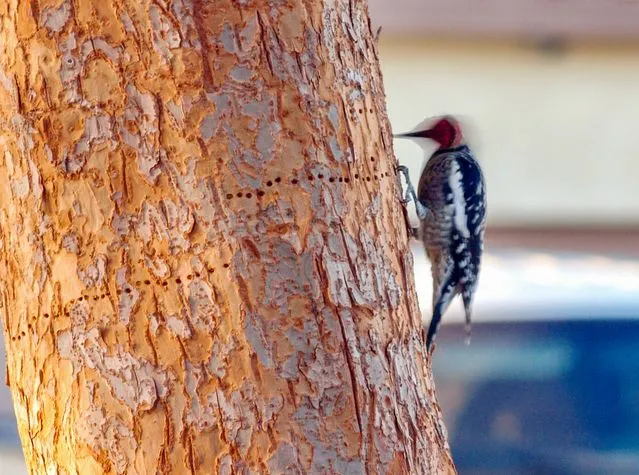
Woodpeckers peck trees to search for tasty insects under the bark, carve out cozy nesting homes, and send loud signals to other birds. Their special skulls act like natural helmets to keep them safe while hammering!
Imagine strapping a jackhammer to your face and slamming your nose into a solid wooden post twenty times every single second. It sounds like a fast track to a major headache, but for woodpeckers, it is just another normal day at work!
These hard-hat birds are famous for their rapid-fire drumming sounds that echo across the woods. While it might look like they are just causing trouble for tree bark, their pecking is actually a brilliant survival strategy.
In this guide, you’ll discover the secret science behind why woodpeckers hammer on wood and how their shock-absorbing brains stay protected. It is the perfect information to make your next school science report rock!
Hunting for Hidden Insect Snacks
Underneath thick tree bark lives a hidden buffet of juicy beetle larvae, ants, and spiders. Woodpeckers have sharp hearing and can actually sense the tiny vibrations made by bugs crawling deep inside the wood!
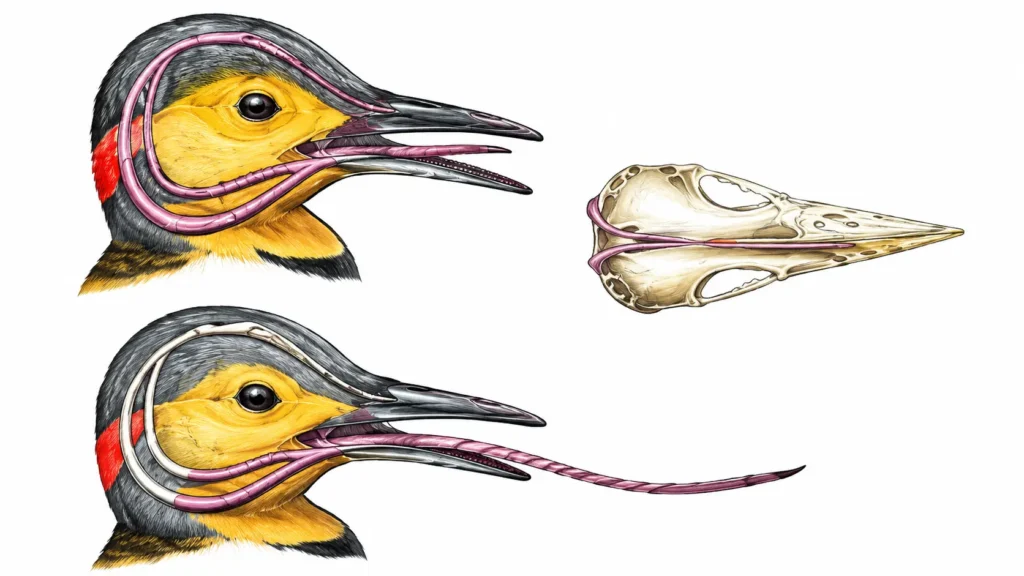
Once a woodpecker pinpoints a bug spot, it uses its chisel-shaped beak to break through the bark. Then, it sticks a long, sticky tongue inside the narrow tunnels to drag out its meal.
Carving Out Cozy Tree Homes
Woodpeckers also use their powerful beaks as construction tools to build safe nesting cavities.
Instead of weaving twig nests on open branches like other birds, woodpeckers chip out large hollow rooms inside dead or soft trees. These wooden rooms protect their eggs and chicks from freezing rain, harsh winds, and hungry snakes.
Did You Know? 🌟
A woodpecker’s tongue is so long that it wraps around the inside of its skull! When the bird isn’t eating, its flexible tongue coils around the back of its brain case like a safety belt to cushion impact shocks.
Nature's Built-In Shock Absorber
How can a bird strike wood at 15 miles per hour without getting a concussion? According to scientists, woodpeckers are equipped with ultimate safety gear!
Spongy Skulls: Their skull bones are porous and mesh-like to absorb impact vibrations.
Tight Brain Space: A woodpecker’s brain fits snugly inside its skull, leaving no room for it to slosh around during heavy strikes.
Beak Alignment: The lower beak is slightly longer than the upper beak, which redirects impact forces down into the body instead of the head.
Foraging vs. Drumming
Woodpeckers make two distinct tapping sounds for completely different reasons.
| Activity | Sound & Speed | Main Purpose |
| Foraging | Slow, irregular tap-tap… tap | Chipping bark to find insects and eat |
| Drumming | Fast, rhythmic rat-a-tat-tat! | Sending long-distance signals to claim territory or call mates |
Myth vs. Fact: Woodpecker Edition
| Myth | Real Fact |
| Woodpeckers peck trees just to sharpen their beaks. | They peck to find food, build nests, or signal mates—not to sharpen their beaks! |
| Woodpeckers get dizzy and faint while hammering. | Their built-in skull cushions prevent brain movement and keep them alert. |
| Woodpecker pecking always kills healthy trees. | They mostly target dead or decaying trees, helping clear out harmful insect infestations! |
Quick Fun Facts 🪵
A woodpecker can peck up to 10,000 to 12,000 times in a single day!
Their stiff, pointed tail feathers act like a third leg tripod to hold them upright on vertical tree trunks.
Woodpeckers have special bristly feathers around their nostrils that block flying wood dust from getting into their lungs.
Abandoned woodpecker tree holes become valuable homes for owls, bluebirds, bats, and squirrels!

Frequently Asked Questions
Woodpeckers drum on metal because it makes an extra loud BANG-BANG-BANG sound! The louder the noise echoes across the neighborhood, the easier it is for them to scare off rival birds and attract a mate.
Woodpeckers can peck at an amazing speed of up to 20 strikes per second! That is almost twice as fast as a machine gun fires.
Nope! Their spongy skull bones, tight brain fit, and shock-absorbing tongue act like a natural helmet system that stops head injury and headaches.
Woodpeckers are forest heroes! They control wood-destroying insect pests and create cavity homes that over 40 other animal species use for shelter.
Conclusion
Woodpeckers peck trees because it is their all-in-one survival tool for finding insect meals, building hollow homes, and broadcasting messages across the forest. Thanks to their incredible shock-absorbing skulls and super-long tongues, they can hammer away safely all day long.
To learn more about amazing animal abilities, check out our fun guides on why bats sleep upside down and the top 10 smartest animals in the world.