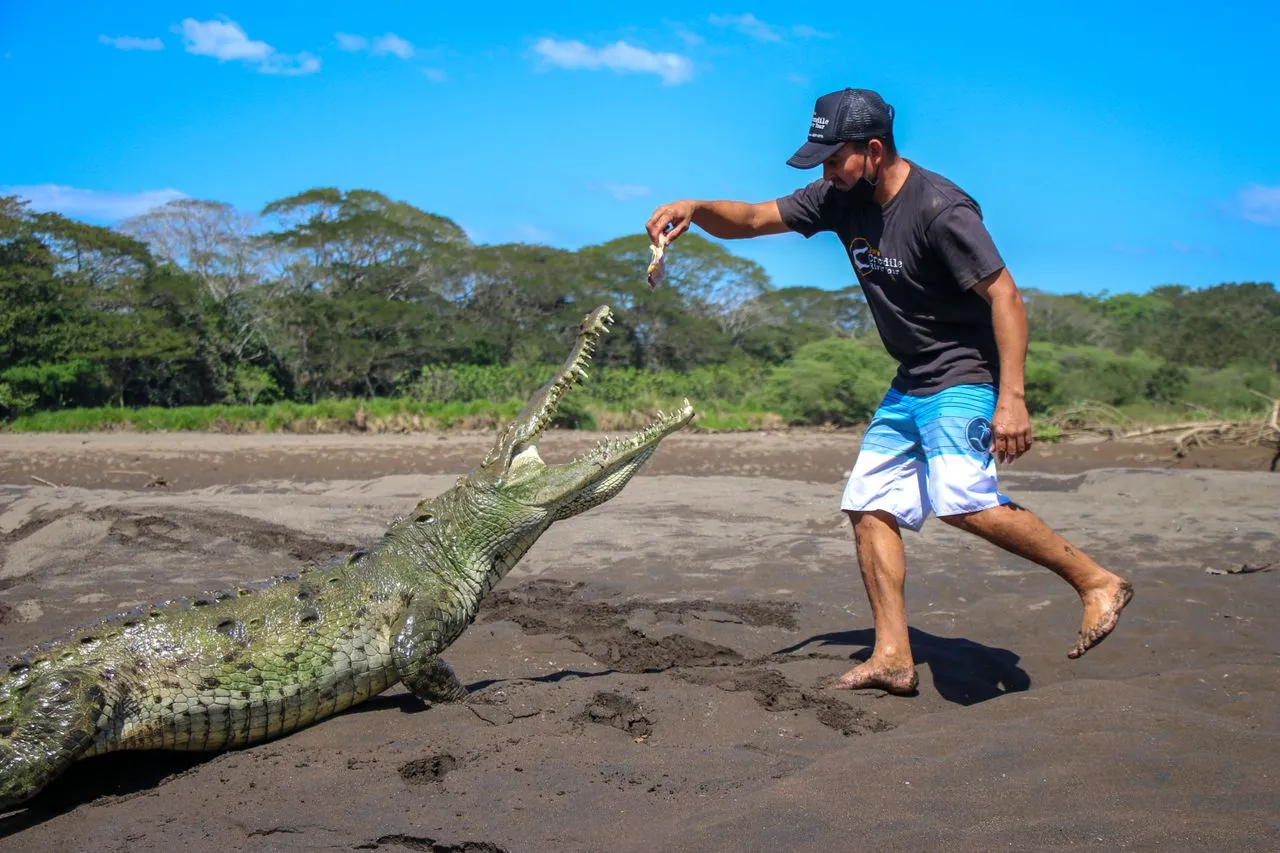
A crocodile has one of the most powerful bites in the animal kingdom. In a 2012 scientific study, researchers measured a bite force of 16,414 newtons (about 3,689 pounds-force) from a saltwater crocodile. This remains a widely cited record for the strongest bite force directly measured in a living animal. Crocodiles use their powerful jaws to grab prey, hold it securely, and help tear food apart.
Animal group: Reptiles
Family: Crocodylidae
Strongest measured bite in the 2012 study: Saltwater crocodile
Recorded bite force: 16,414 newtons
Main source of power: Strong jaw-closing muscles
Teeth: Conical and designed to grip and hold prey
Hunting style: Usually ambush hunting
Special ability: Powerful bite combined with a strong grip
How Strong Is a Crocodile's Bite?
Imagine trying to open the jaws of a crocodile once they have clamped shut. Its jaw muscles are built to close the mouth with tremendous force, making it extremely difficult to escape once an animal is caught.
A major study published in 2012 examined bite force and tooth pressure across all 23 crocodilian species living at the time. Researchers found that crocodilians produced the highest bite forces recorded in living animals in their measurements.
The strongest result came from a saltwater crocodile, which produced a bite force of 16,414 newtons. That is approximately 3,689 pounds-force.
One important detail: newtons measure force, while pounds per square inch (PSI) measure pressure. They describe different things, so the two numbers should not be treated as interchangeable.
The result also does not mean every crocodile has the same bite strength. Bite force depends heavily on body size, and a smaller crocodile cannot produce the same force as a very large adult.
Which Crocodile Has the Strongest Bite?
The saltwater crocodile (Crocodylus porosus) holds the best-known record for the strongest bite force directly measured in a living animal.
It is also the largest living reptile species. Large individuals have massive heads, powerful jaw muscles, and a body built for capturing prey in rivers, estuaries, coastal waters, and other suitable habitats.
The 2012 research measured mature adults from all living crocodilian species, including crocodiles, alligators, caimans, and gharials. The researchers found that body size was a major factor in bite force.
You may also see claims that the Nile crocodile has a bite force of 5,000 PSI. Some popular animal articles repeat this figure, but comparisons between different species can be misleading when the numbers come from different methods or estimates. The most useful comparison is one that clearly distinguishes direct measurements from predictions.
Why Is a Crocodile's Bite So Powerful?
A crocodile’s bite is the result of several body features working together.
1. Strong Jaw Muscles
Crocodiles have large muscles that close their jaws. These muscles attach to the skull and operate with a structure suited to generating strong biting forces.
When a crocodile catches prey, these muscles help it clamp down and maintain a firm grip.
Interestingly, the muscles that close a crocodile’s jaws are much more powerful than those used to open them. However, this does not mean a crocodile is harmless when its mouth is closed. Never approach or attempt to handle one.
2. A Strong Skull
The crocodile’s skull supports the muscles and withstands the stresses created when it bites.
Its head is shaped to help it capture and hold prey. Although snout shapes differ between crocodilian species, the 2012 study found that body size was a much stronger predictor of bite force than many researchers had expected.
3. Sharp, Cone-Shaped Teeth
Crocodile teeth are pointed and generally cone-shaped. They are well suited to piercing and holding prey rather than chewing food like human molars do.
Crocodiles also replace their teeth throughout life. When a tooth is lost, a replacement can develop, helping them maintain their ability to catch prey.
The combination of strong jaws and gripping teeth makes it difficult for prey to escape once caught.
How Do Crocodiles Use Their Powerful Bite?
A crocodile’s bite is useful for more than simply crushing food. It plays a central role in the animal’s hunting strategy.
Catching Prey
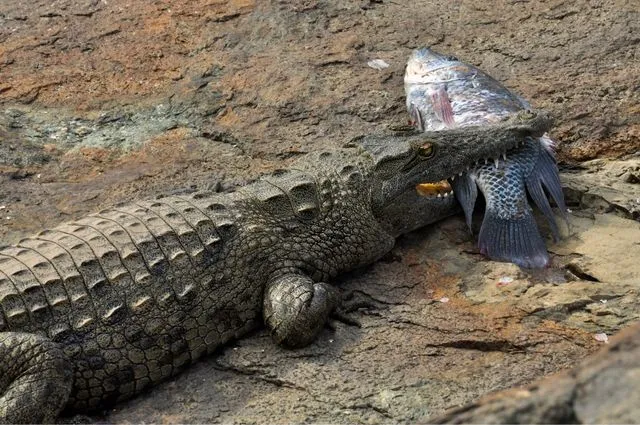
Crocodiles often wait quietly near the water’s edge or beneath the surface. When prey comes close enough, they can lunge forward and grab it with their jaws.
Depending on the species and its habitat, prey may include fish, birds, reptiles, and mammals.
Holding on Tight
A powerful grip helps a crocodile keep hold of struggling prey. Its teeth work like gripping points, while its jaw muscles help maintain the hold.
The Famous Death Roll
Some crocodiles use a spinning movement known as the death roll when handling large prey. By rotating their bodies, they can help tear off pieces of food.
The death roll is not simply a measure of bite strength. It combines the crocodile’s jaws, muscular body, and movement in the water.
Eating Without Chewing
Crocodiles do not chew food in the same way humans do. They may swallow smaller prey whole or tear larger prey into pieces they can swallow.
Their strong jaws help capture and process food, while digestion takes place inside the stomach.
Crocodile Bite Force vs Other Animals
Crocodiles are famous for their powerful bites, but animal bite-force rankings need careful interpretation.
| Animal | What Research Tells Us |
|---|---|
| Saltwater crocodile | A bite force of 16,414 N was directly measured in one specimen in the 2012 study. |
| American alligator | Researchers have directly measured very powerful bites, including a 13,300 N result in an earlier study. |
| Spotted hyena | The 2012 crocodilian study compared its findings with a reported maximum of around 4,500 N for this mammal. |
| Great white shark | Some bite-force figures come from computer models rather than direct measurements from a living shark. |
| Tyrannosaurus rex | Bite force is estimated from fossils and biomechanical models because the animal is extinct. |
These figures come from different studies and methods, so they should not be treated as a perfectly controlled competition. The strongest directly measured bite is different from a bite force predicted using a computer model.
Where Do Crocodiles Live?
Crocodiles live in parts of Africa, Asia, Australia, and the Americas, depending on the species. Many inhabit rivers, lakes, wetlands, swamps, estuaries, and coastal environments.
Saltwater crocodiles occur across parts of Southeast Asia and northern Australia. Nile crocodiles are found across much of sub-Saharan Africa.
Living near water helps crocodiles approach prey while remaining difficult to detect. Their powerful bite is particularly useful in these habitats, where they can seize animals that come to drink or cross the water.
CritterScore - Crocodile Bite Power
🦷 Jaw-Closing Force: ⭐⭐⭐⭐⭐(5/5)
💪 Grip on Prey: ⭐⭐⭐⭐⭐(5/5)
🐊 Skull and Jaw Design: ⭐⭐⭐⭐⭐(5/5)
🎯 Prey-Holding Ability: ⭐⭐⭐⭐⭐(5/5)
🏃 Pursuit on Land: ⭐⭐⭐(3/5)
Standout Ability: An exceptionally powerful bite that helps the crocodile capture and hold prey.
These ratings are an educational summary, not laboratory measurements.
Myth vs Fact
| Myth | Fact |
|---|---|
| Every crocodile has the same bite force. | Bite force varies by species, body size, and individual. |
| PSI and newtons measure the same thing. | Newtons measure force; PSI measures pressure. |
| Crocodiles chew their food like humans. | They generally swallow smaller prey whole or tear larger prey into pieces. |
| Crocodiles rely only on their bite when hunting. | Ambush, body movement, and sometimes the death roll also help them capture and handle prey. |
| Every popular bite-force ranking is scientifically comparable. | Rankings may mix direct measurements with estimates produced by different methods. |
Quick Quiz
1. Which crocodile produced the strongest directly measured bite in the 2012 study?
A. Saltwater crocodile
B. Dwarf crocodile
C. American alligator
2. What do newtons measure?
A. Speed
B. Force
C. Temperature
3. What is the death roll?
A. A crocodile sleeping underwater
B. A crocodile changing colour
C. A spinning movement used to help tear prey apart
Answers: 1. A — Saltwater crocodile; 2. B — Force; 3. C — A spinning movement used to help tear prey apart.
Critter Challenge
Imagine you are comparing the jaws of a crocodile with the jaws of a human.
Write down three differences in their teeth, jaw muscles, or feeding habits. Then explain why a crocodile benefits from having a powerful bite in its natural habitat.
Remember: crocodiles are dangerous wild animals. Observe them only from a safe distance and follow local wildlife guidance.
Frequently Asked Questions
How much force can a crocodile bite with?
A 2012 study recorded 16,414 newtons, approximately 3,689 pounds-force, from one saltwater crocodile. Other individuals may produce different forces depending on their size and other factors.
Is a crocodile’s bite stronger than a shark’s?
The answer depends on the species and how bite force is measured. The saltwater crocodile holds a record for directly measured bite force, while some shark figures come from computer models. Those methods should not be compared as though they were identical tests.
Why are crocodile teeth so sharp?
Their pointed teeth help pierce and grip prey. Crocodiles generally rely on holding and tearing rather than chewing food into small pieces.
Can a crocodile crush bones?
Crocodiles can exert enough force to cause severe damage to prey, and their teeth can penetrate tough tissues. Exactly what happens depends on the animal, the prey, and where the bite lands.
Are crocodiles dangerous to humans?
Yes. Some crocodile species can seriously injure or kill people. Never approach, feed, or swim in waters where dangerous crocodiles may be present. Follow local warning signs and wildlife advice.
Conclusion
A crocodile’s bite is one of the most impressive examples of strength in the animal kingdom. In a major scientific study, a saltwater crocodile produced a directly measured bite force of 16,414 newtons. Its powerful jaw muscles and gripping teeth help it catch prey, hold on securely, and feed successfully.
Related Articles on CritterPages
Sources
National Geographic – Crocodiles Have Strongest Bite Ever Measured, Hands-on Tests Show
Erickson, G. M. et al. (2012). Insights into the Ecology and Evolutionary Success of Crocodilians Revealed through Bite-Force and Tooth-Pressure Experimentation. PLOS ONE.
Africa Safaris – Crocodile Bite Force
BBC Science Focus – Top 10: Which Animals Have the Strongest Bite?
Guinness World Records – Strongest Molariform Bite Force for a Crocodile