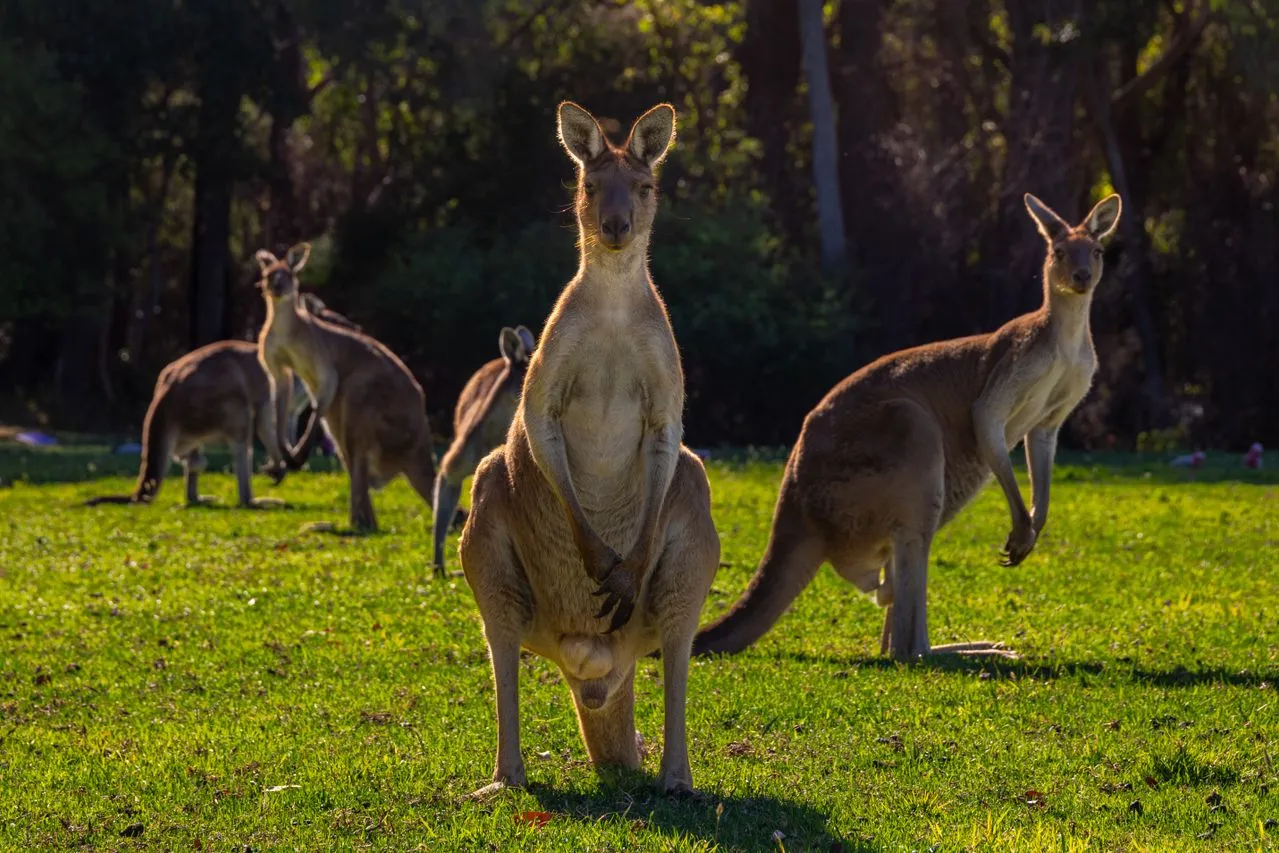
Kangaroos have powerful hind legs that help them jump long distances, move quickly, and defend themselves. Large kangaroos can deliver dangerous kicks using their strong legs and sharp foot claws. Their muscular tails also help support their bodies during certain movements and fights. However, there is no single reliable measurement that describes the maximum force of every kangaroo’s kick.
Animal: Kangaroo
Animal group: Marsupial mammal
Native region: Mainly Australia
Main source of strength: Powerful hind legs
Special feature: Long, muscular tail
Diet: Mainly grasses and other vegetation
Defense method: Kicking, scratching, and moving away from danger
Famous species: Red kangaroo and eastern grey kangaroo
How Strong Is a Kangaroo?
Kangaroos may look calm while grazing, but their bodies are built for powerful movement. Their strong hind legs allow them to leap across open ground, escape danger, and deliver forceful kicks when threatened.
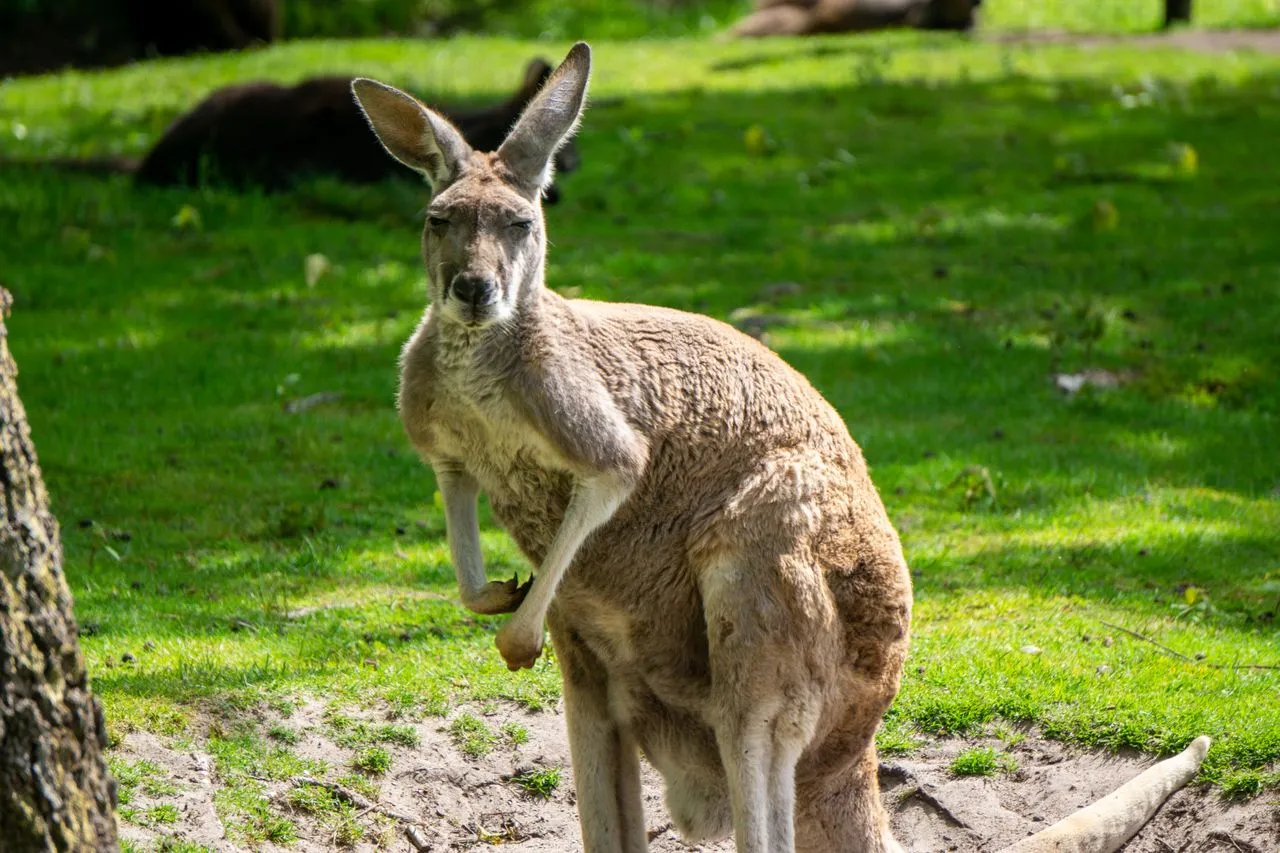
The red kangaroo is the largest living kangaroo species. Large adult males can weigh around 90 kilograms (200 pounds), although size varies between individuals. With their muscular legs and sturdy bodies, they can be formidable animals when defending themselves.
But kangaroo strength is not just about fighting. Their muscles, tendons, feet, and tail work together to help them travel efficiently through their natural habitats.
Why Are Kangaroo Legs So Powerful?
A kangaroo’s hind legs are much larger and stronger than its front limbs. This difference is easy to notice when the animal stands upright.
Several features help explain their power:
1. Strong Leg Muscles
Kangaroos have well-developed muscles around their hips, thighs, and lower legs. These muscles help push their bodies off the ground during a jump.
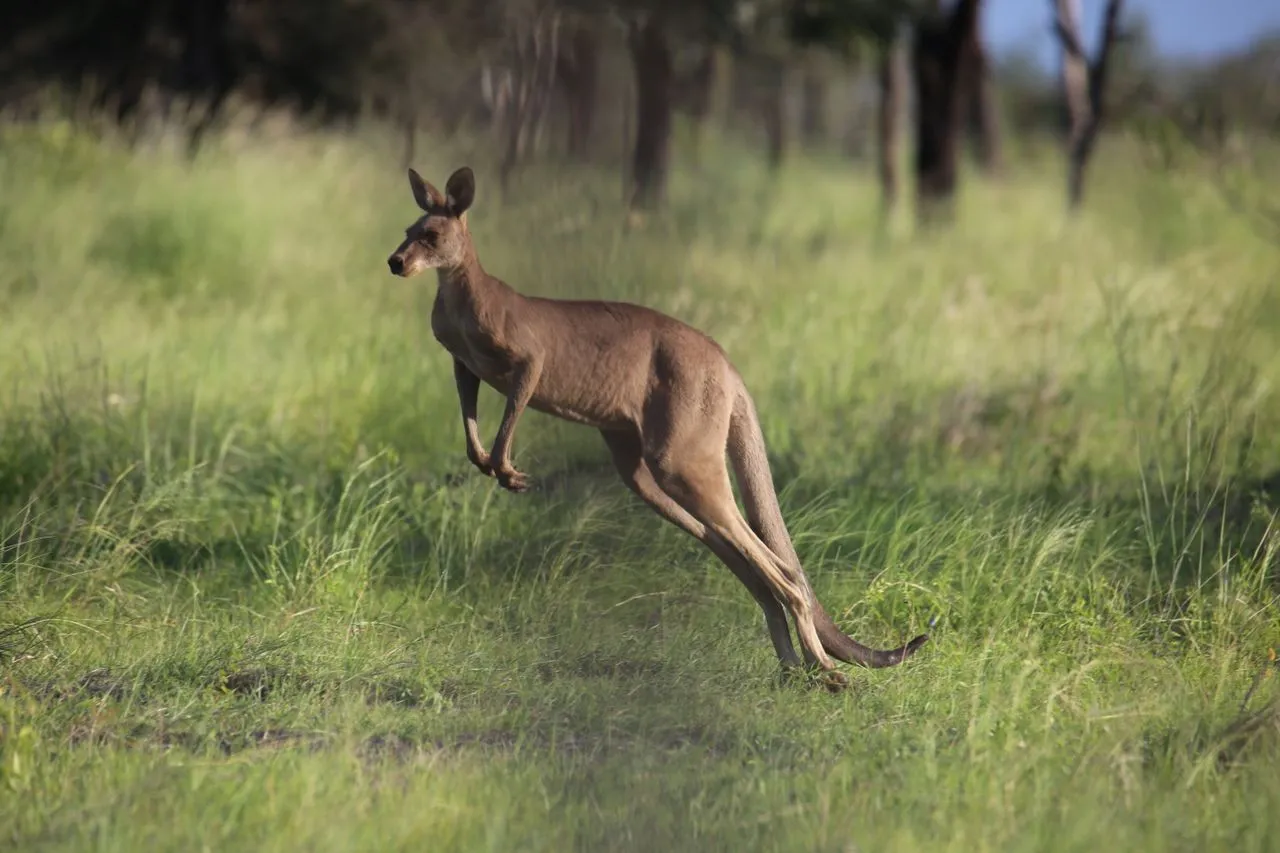
When a kangaroo hops, both hind feet push off together. This movement allows the animal to cover long distances without taking ordinary walking steps like a human.
2. Spring-Like Tendons
Muscles are only part of the story. Kangaroos also have elastic tendons in their hind legs that can store and return energy during hopping.
Think of a spring being compressed and released. In a similar way, the tendons help kangaroos move efficiently as they hop repeatedly.
This adaptation is especially useful when travelling across open grasslands and dry regions.
3. Large Hind Feet
Their large feet provide support during movement. The hind feet also have strong toes and claws that can cause serious injuries if a kangaroo kicks an animal or person.
This is one reason people should never approach a wild kangaroo too closely.
How Powerful Is a Kangaroo's Kick?
A large kangaroo can deliver a forceful kick that may cause severe injury. During a defensive encounter, it may lean back on its muscular tail and use its hind legs to strike.
Male kangaroos also use their legs during fights with other males. These contests can involve pushing, grappling, and kicking.
You may see online claims that a kangaroo’s kick produces a specific number of pounds of force. Such figures should be treated carefully unless they are supported by reliable measurements. Kick force can vary with the animal’s size, movement, and circumstances.
The important fact is clear: a kangaroo’s kick can be dangerous, even though there is no universally accepted maximum-force figure for all kangaroos.
How Does a Kangaroo Use Its Tail?
A kangaroo’s tail is more than a long body part hanging behind it. It is thick, muscular, and important for movement.
The tail helps the animal balance while hopping and turning. It also supports the body when the kangaroo sits or shifts its weight.
During some defensive and fighting movements, a kangaroo can use its tail as a support point while bringing its hind legs forward to kick. This helps stabilise its body.
The tail therefore works alongside the legs rather than simply acting as a decoration or counterweight.
Do Kangaroos Use Their Strength Only for Fighting?
No. Most of a kangaroo’s strength is useful for everyday survival.
Hopping: Powerful legs help it travel across open ground.
Escaping danger: Quick, long jumps can help it move away from predators.
Finding food: Efficient movement helps it travel between feeding areas.
Competition: Males may use their forelimbs and hind legs during fights.
Self-defense: Kicking can help a kangaroo protect itself when it feels threatened.
Kangaroos generally prefer to avoid danger rather than fight unnecessarily. A frightened animal may become unpredictable, especially if it feels trapped.

Can a Human Beat a Kangaroo in Strength?
It depends on what kind of strength you are comparing. Humans have strong hands and arms suited to lifting, carrying, and handling objects. Kangaroos have bodies specialised for hopping, jumping, and powerful leg movements.
A direct comparison is therefore not simple. A kangaroo’s kicking ability does not mean it is stronger than a human in every possible task.
Trying to test strength against a kangaroo would also be dangerous. Large individuals can cause serious injuries with their feet and claws.
The best way to appreciate their strength is to observe their natural movements from a safe distance.
Where Do Kangaroos Live?
Kangaroos are native mainly to Australia, where different species occupy different environments. Red kangaroos are commonly associated with open plains, grasslands, and scrubland. Eastern grey kangaroos are often found in woodlands and grassy areas.
Their powerful legs help them move through these habitats in search of vegetation and water.
Map Placeholder: Add a map showing the native distribution of red kangaroos and eastern grey kangaroos across Australia.
CritterScore - Kangaroo Strength
🦵 Hind-Leg Power: ⭐⭐⭐⭐⭐(5/5)
🦘 Jumping Ability: ⭐⭐⭐⭐⭐(5/5)
🦴 Kicking Defense: ⭐⭐⭐⭐⭐(5/5)
🐾 Forelimb Strength: ⭐⭐⭐(3/5)
⚖️ Balance and Support: ⭐⭐⭐⭐⭐(5/5)
Standout Ability: Powerful hind legs designed for efficient hopping and forceful defensive kicks.
These ratings are an educational comparison, not laboratory measurements.
Myth vs Fact
| Myth | Fact |
|---|---|
| Kangaroos use their strength only to fight. | Their legs are mainly important for movement, while kicks can help in defense and competition. |
| Every kangaroo has the same kicking power. | Strength varies with species, size, age, and individual condition. |
| A kangaroo’s tail is useless during movement. | Its muscular tail helps with balance and support. |
| Kangaroos are always aggressive. | They often avoid confrontation, but can be dangerous if threatened. |
| There is one proven kick-force number for all kangaroos. | Kick force varies, and commonly repeated maximum figures may lack reliable evidence. |
Quick Quiz
1. Which part of a kangaroo’s body provides most of its jumping power?
A. Front legs
B. Hind legs
C. Ears
2. What is one important function of a kangaroo’s tail?
A. Helping with balance and support
B. Digging deep burrows
C. Catching fish
3. Why might a kangaroo kick?
A. To defend itself or compete with another kangaroo
B. To fly
C. To catch insects with its feet
Answers: 1. B – Hind legs; 2. A – Helping with balance and support; 3. A – To defend itself or compete with another kangaroo.
Critter Challenge
Imagine you are observing kangaroos in an Australian wildlife reserve.
Can you identify three body parts that help a kangaroo move or defend itself? Write down how each part helps the animal survive.
Remember: observe wildlife quietly and from a safe distance. Never try to approach or provoke a kangaroo.
Frequently Asked Questions
Are kangaroos naturally strong?
Yes. Their powerful hind legs, elastic tendons, large feet, and muscular tails are adapted for hopping, balance, and defense.
Can a kangaroo’s kick seriously injure a person?
Yes. A large kangaroo can cause serious injuries with its powerful legs and claws. Keep a safe distance and never corner or attempt to handle a wild kangaroo.
Do all kangaroos have equally powerful kicks?
No. Different species vary in size and build, and individuals also differ in strength.
Why do male kangaroos fight?
Male kangaroos may compete with each other, particularly over access to mates. These encounters can include pushing, grappling, and kicking.
Is a kangaroo stronger than a human?
There is no simple overall answer because the two animals have different physical adaptations. Kangaroos are especially powerful at hopping and kicking, while humans excel at other types of movement and tasks.
Conclusion
Kangaroos are remarkable animals with powerful hind legs, strong feet, and muscular tails. These features help them hop across long distances, maintain balance, and deliver dangerous kicks when threatened. Although exact kick-force claims should be treated with caution, there is no doubt that a large kangaroo deserves respect and space.
Their strength is not simply about fighting. It is part of the specialised body design that helps them survive in Australia’s varied landscapes.
Keep exploring more animal abilities with CritterPages. 🐾
Sources
San Diego Zoo Wildlife Alliance — Kangaroo and Wallaby
PBS Nature — Kangaroo Fact Sheet
Fort Wayne Children’s Zoo — The Kangaroo Hop
Lodder, M. A. — Functional morphology of the hindleg in two kangaroos, European Journal of Morphology (1991).
Zoo Berlin — Red Kangaroo