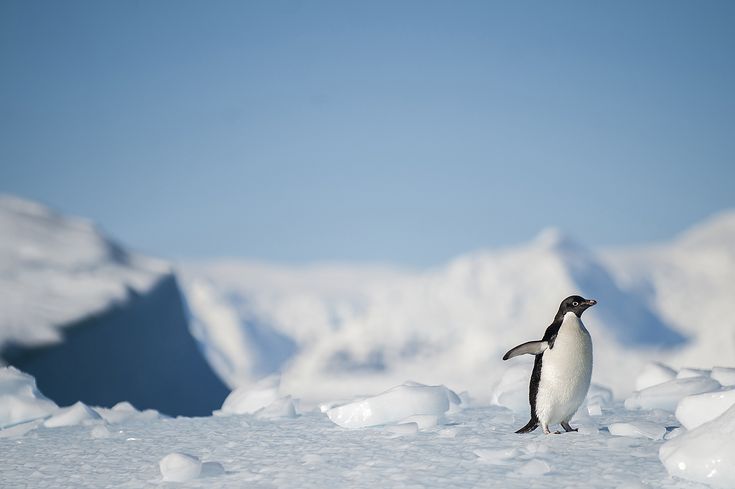
Penguins are birds, but their wings evolved into powerful flippers for swimming rather than flight. Their streamlined bodies, dense bones, strong muscles, and waterproof feathers make them excellent underwater hunters.
Imagine being a bird that cannot fly but can “fly” underwater.
That is the unusual life of a penguin. Their wings are too short and specialized for normal flight, but underwater those same wings become powerful flippers. Penguins spend much of their lives at sea, hunting fish, squid, and other marine prey.
And while many people picture penguins only on Antarctic ice, different penguin species live in a variety of Southern Hemisphere environments.
🪽 Flight: Flightless
🌊 Main habitat: Ocean and coastal areas
🐟 Diet: Fish, squid, krill, and other marine prey
🏊 Special ability: Powerful underwater swimming
🌍 Range: Southern Hemisphere
❄️ Cold adaptation: Dense feathers, body fat, and heat-conserving adaptations
1. Their Wings Became Flippers
Penguin wings are not useless-they simply have a different job.
Over millions of years, penguin wings became short, stiff flippers designed to push against dense seawater. Unlike flying birds, which use their wings to generate lift in air, penguins use their flippers to generate powerful underwater thrust.
Their bones are also relatively dense and lack the air-filled spaces common in many flying birds. This helps give their flippers the strength and stability needed for swimming.
2. Built Like Underwater Rockets
A penguin’s body has a streamlined, torpedo-like shape that helps reduce resistance as it moves through water.
Its feet and legs sit toward the back of the body. On land, this contributes to the famous waddle. Underwater, however, they can help act as rudders while the flippers provide most of the propulsion.
Some penguins also use porpoising-leaping through the water’s surface in repeated bursts. This can help them travel efficiently while allowing them to breathe.
3. Feathers That Help Keep Them Warm
Penguins rely heavily on their feathers for insulation and protection.
Their feathers are arranged densely across the skin, creating an effective barrier between the body and the cold environment. Penguins also spend considerable time preening, spreading oil from a gland near the base of the tail across their feathers. This helps make the plumage water-repellent.
For species living in extremely cold conditions, insulation is especially important.
4. How Penguins Handle the Cold
Emperor penguins are particularly well adapted to Antarctic conditions. Their relatively large bodies help conserve heat, while dense feathers and a layer of body fat provide additional insulation.
They also use huddling behavior. By standing close together, penguins can reduce exposure to the cold air and share warmth.
But penguins are not all Antarctic birds. Species live in warmer regions too, including areas around South America, Africa, Australia, New Zealand, and the Galápagos.
5. Life Underwater
Penguins are remarkably comfortable in the ocean. Smithsonian notes that some species spend up to 75% of their lives in the water.
They hunt underwater using their excellent swimming ability, diving to pursue prey and returning to land or sea ice to rest and breed.
This is why calling penguins simply “birds that cannot fly” misses the bigger picture.
They gave up aerial flight—but became highly specialized marine birds.
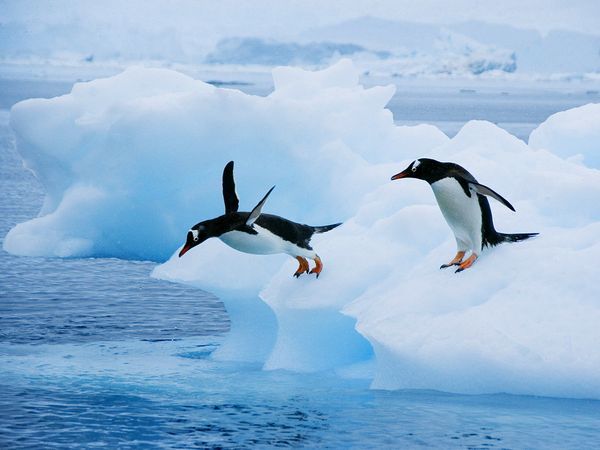
Visual Breakdown: Why Penguins Are Such Good Swimmers
| Feature | How It Helps |
|---|---|
| 🪽 Short, stiff wings | Powerful underwater propulsion |
| 🐟 Streamlined body | Reduces resistance |
| 🦶 Rear-positioned feet | Helps with steering |
| 🪶 Dense feathers | Insulation and water resistance |
| 🫧 Diving ability | Helps them reach underwater prey |
| 🧈 Body fat | Adds insulation in cold water |
Myth vs Fact
| ❌ Myth | ✅ Fact |
|---|---|
| Penguins are not really birds because they cannot fly. | Penguins are birds; they simply evolved for swimming instead of aerial flight. |
| All penguins live on Antarctic ice. | Penguins live throughout parts of the Southern Hemisphere, including warmer regions. |
| Penguin wings are useless because they cannot fly. | Their wings are powerful flippers adapted for underwater swimming. |
| Penguins only waddle everywhere. | They can swim extremely well and may also slide across ice and snow. |
Quick Fun Facts
- Penguins are flightless marine birds.
- Some penguins spend much of their lives in the ocean.
- Their wings work like underwater flippers.
- Emperor penguins are the largest penguin species.
- Penguins can use porpoising to move through the water.
- Not every penguin lives in a freezing Antarctic environment.
Quick Quiz
Why did penguin wings become flipper-like?
A. To help them climb trees
B. To help them swim underwater
C. To help them dig nests
D. To help them run faster
✅ Correct Answer: B — To help them swim underwater
Critter Challenge
Look at a penguin’s body and a flying bird’s body.
Can you find three differences that would help a penguin swim rather than fly?
Think about the wings, body shape, and bones before checking the explanation above.
FAQ
Are penguins birds?
Yes. Penguins are birds, even though they cannot fly through the air.
Why can’t penguins fly?
Their wings evolved into strong flippers specialized for underwater swimming rather than producing aerial lift.
Are all penguins found in Antarctica?
No. Penguins live across parts of the Southern Hemisphere, including several relatively warm regions.
How fast can penguins swim?
Swimming speeds vary by species and situation. NOAA gives a broad range of about 24–40 km/h (15–25 mph) for penguins underwater.
CritterScore
| Ability | Rating |
|---|---|
| 🏊 Swimming | ⭐⭐⭐⭐⭐ |
| ❄️ Cold Survival | ⭐⭐⭐⭐⭐ |
| 🪽 Flying | ⭐ |
| 🌊 Diving | ⭐⭐⭐⭐⭐ |
🏆 Winner: Underwater Adaptation – Penguins transformed their wings from flight tools into highly effective swimming flippers.
Sources & References
- NOAA Ocean Service – Penguin flight and swimming adaptations
- Smithsonian Ocean – Penguin anatomy, swimming, feathers, and evolution
- NOAA Ocean Today – Emperor penguin adaptations to Antarctic conditions
Conclusion
Penguins may have lost the ability to fly through the air, but evolution gave them something remarkable in return. Their flipper-like wings, streamlined bodies, dense feathers, and swimming skills make them specialists of the ocean.
They don’t rule the sky-but underwater, penguins are in their element.
Want to explore more? Check out our articles on [Animal Abilities] and [Top 10 Animals With Unique Abilities] to discover more remarkable adaptations in the animal world.