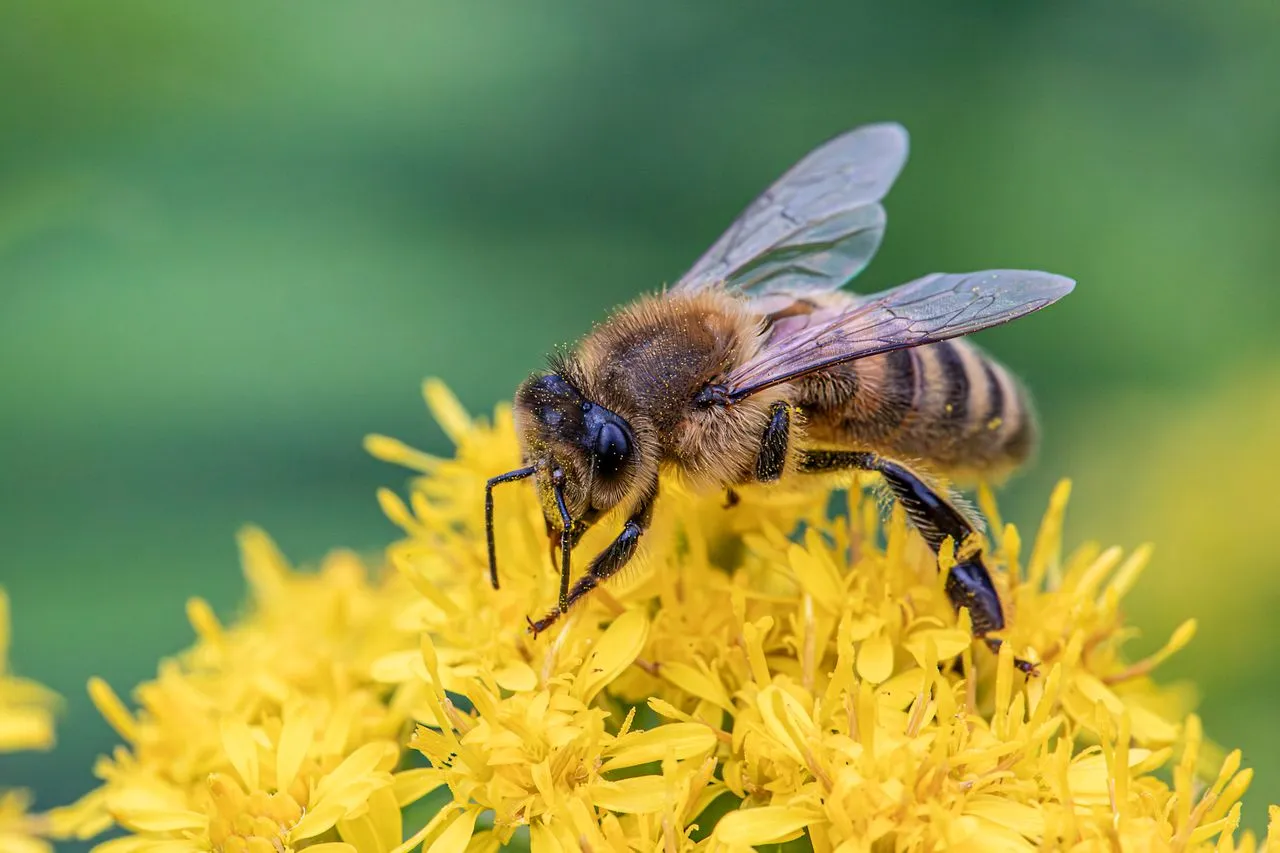
Bees do not just fly around guessing! They locate nectar using invisible ultraviolet patterns on flower petals, a super-powerful sense of smell, and electrically charged body hairs. They can even share dynamic directions with their hive mates using a special “waggle dance”!
Imagine wearing special secret-agent goggles that reveal glowing, invisible landing strips on every snack shop in town. It sounds like a fun superhero movie, but for hardworking bees, it is a matter of everyday survival!
Every single day, a single honeybee might visit hundreds of different blossoms to gather food for its family. With millions of plants in the wild, visiting empty blossoms would waste way too much energy.
In this guide, you’ll discover the astonishing natural senses, invisible clues, and secret communication tricks bees use to pinpoint sweet nectar every single time!
Animal: Honeybee (Apis mellifera)
Home: Hives, hollow trees, and garden nests
Favorite Snack: Nectar (sweet liquids) and pollen (protein powder)
Eye Power: 5 eyes (2 large compound eyes and 3 tiny simple eyes)
Flight Speed: Typically around 15 miles per hour (24 km/h)
Hive Size: Approximately 20,000 to 60,000 workers in a single colony
1. Secret UV "Bullseyes" on Flower Petals
While humans see standard red, green, and blue, bees possess a completely different visual spectrum. Bees can see ultraviolet (UV) light, which is invisible light energy that bounces off objects.
Many flowers have hidden UV patterns on their petals called nectar guides (invisible lines or targets that point straight to the flower’s center). To our eyes, a sunflower looks solid yellow, but to a buzzing bee, it looks like a bright glowing target with a dark center mark!
UV Vision: Bees can easily spot invisible ultraviolet patterns on flower petals.
Nectar Guides: Natural color markers guide bees directly to the hidden sweet liquid.
Color Preference: Bees typically prefer blue, purple, and yellow blossoms.
2. A Super-Powered Sense of Smell
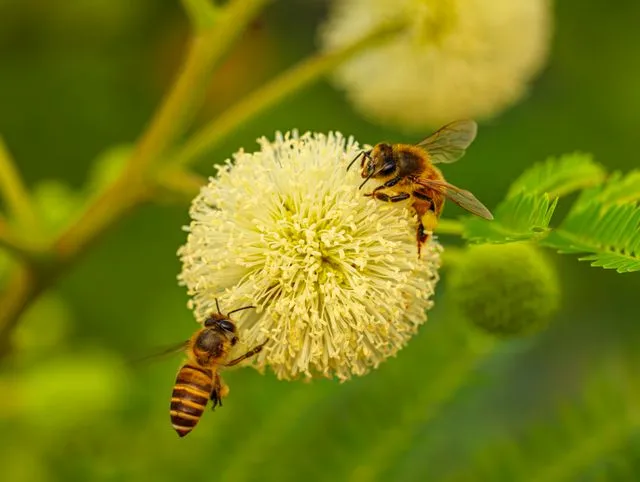
In addition to visual cues, bees smell the world through sensitive receptors in their two antennae (feathery feelers on top of their head). A bee’s sense of smell is typically 100 times more sensitive than a human’s!
When a flower is full of sugary nectar, it releases a distinct floral perfume into the air. Bees quickly learn which scents mean a high-reward meal and will skip past faint-smelling, empty flowers altogether.
Did You Know?
Bees carry a positive static electric charge! When they fly near a flower with a negative charge, their tiny body hairs bend, letting them “feel” if another bee recently visited that flower!
3. Incredible Memory and Landmark Navigation
Bees are tiny insects, but their brains are remarkably complex! Bees can memorize specific flight routes, visual landmarks, and exact flower locations across several miles.
If a patch of wildflowers typically opens up early in the morning, a bee remembers the schedule and returns at the exact same time the following day.
Landmark Map: Bees use tall trees, rocks, and buildings to navigate back to the hive.
Internal Clock: Bees remember what time of day specific flowers produce the most nectar.
Efficiency: Remembering productive spots keeps the colony from wasting precious flight energy.
🎥 Watch: How Bees See Hidden UV Targets on Flowers
You can witness the amazing invisible ultraviolet patterns that bees use to navigate flowers in this official footage:
4. The Famous "Waggle Dance" Communication
When a scout bee discovers a massive field full of sweet nectar, it does not keep the secret to itself. It flies straight back home and performs the waggle dance (a special wiggling movement in a figure-eight shape).
The angle of the dance tells other worker bees the direction of the flowers relative to the sun! The duration of the belly-wiggle tells them the approximate distance.
Visual Sense Comparison
Human Vision: Sees Red, Green, and Blue
Bee Vision: Sees Green, Blue, and Ultraviolet (UV)
Human View of Sunflower: Plain yellow petals with a dark center
Bee View of Sunflower: A bright glowing UV bullseye pointing directly to nectar
Myth vs. Fact
| Myth | Fact |
| ❌ Myth: Bees visit every single flower they see completely at random. | ✅ Fact: Bees carefully inspect colors, scents, and electric fields to select only nectar-rich blossoms! |
| ❌ Myth: Bees can see the exact same bright red colors that humans see. | ✅ Fact: Bees are typically blind to red light and usually mistake red flowers for dark shadowy patches. |
| ❌ Myth: Honeybees hunt for nectar all alone without talking to their colony. | ✅ Fact: Bees perform a physical “waggle dance” inside the hive to share precise map coordinates with family members! |
Quick Fun Facts
Scientists discovered that honeybees can perform simple math like addition and subtraction!
A single worker bee typically produces only 1/12th of a teaspoon of honey during its entire lifetime.
Honeybees beat their wings approximately 200 times every single second to create their famous buzz.
Bees can recognize individual human faces using pattern recognition in their compound eyes!
Frequently Asked Questions
Honeybees typically fly up to 3 miles (around 5 km) away from their hive to search for food. If good nectar sources are scarce, they can travel up to 5 miles (8 km) before returning home!
Yes! Bees can detect tiny changes in a flower's scent and electric field. When a bee lands on a blossom, it leaves behind a tiny electrostatic footprint that warns other bees the nectar is temporarily depleted.
No, the waggle dance is unique to honeybees! Wild bumblebees rely on individual memory, scent markers, and trial-and-error foraging rather than performing complex directional dances.
Neither! Hyenas belong to their own unique family (Hyaenidae), which falls under the suborder Feliformia meaning they are actually more closely related to cats, mongooses, and meerkats than to dogs!
As bees drink nectar, tiny pollen grains stick to their furry bodies. When they hop to the next blossom, they transfer pollen, allowing plants to produce seeds, fruits, and new flowers!
Quick Quiz
What secret visual cue helps bees find nectar inside a flower?
A) Bright pink sunglasses
B) Ultraviolet nectar guides ✅
C) Flashing neon signboards
D) Glowing red petals
Critter Challenge
Look closely at a local flower patch or garden near your home! Observe which color flowers bees land on most often versus which ones they pass by.
💡 Bonus: Research native wild plants in your area and discover which specific flowers produce the highest amounts of nectar for local pollinators!
Want to explore more? Check out an illustrated plant botany book or watch an official nature documentary on insect senses!
CritterScore
👀 UV Vision: ⭐⭐⭐⭐⭐(5/5)
👃 Scent Sensing: ⭐⭐⭐⭐⭐(5/5)
🧠 Brain Memory: ⭐⭐⭐⭐(4/5)
💃 Dance Skills: ⭐⭐⭐⭐⭐(5/5)
🏆 Winner Line: The Honeybee is nature’s ultimate nectar detective, combining secret UV goggles, electric senses, and dance moves to find the sweetest treats!
Conclusion
Bees do not simply fly around guessing which flowers hold sweet treats. They combine invisible UV vision, a powerful sense of smell, sharp memories, and clever dance moves to find the very best food sources.
To discover more amazing animal tricks, explore our fun guides on Lion vs Hyena: Who Would Win in a Fight? and How Do Starfish Regrow Their Arms?.
Sources & References
• National Geographic – Bees Can Sense the Electric Fields of Flowers
• Smithsonian’s National Zoo – Pollinator Vision and Behavioral Research
• World Wildlife Fund (WWF) – Bee Habitat and Ecosystem Importance
• BBC Earth (YouTube Channel) – Insect UV Vision Video