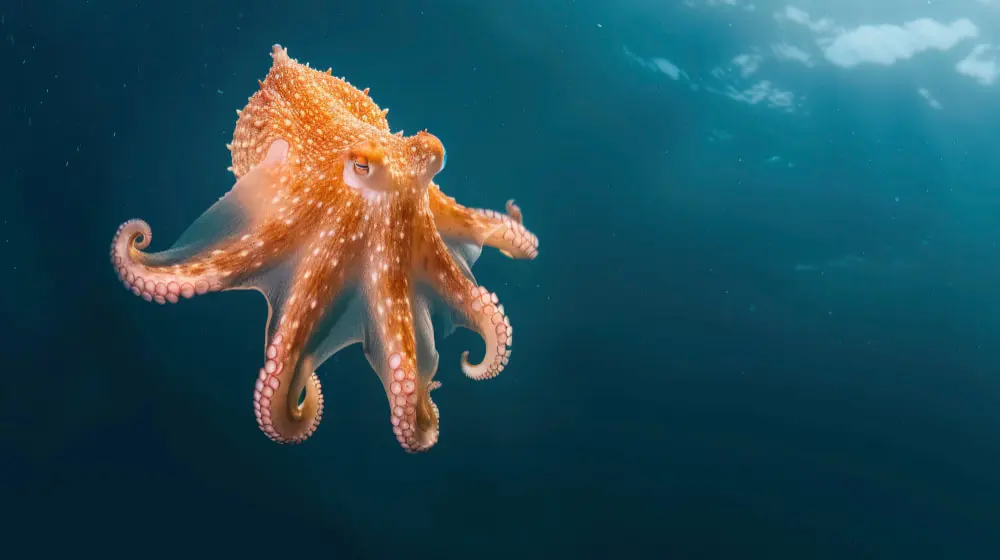
Octopuses escape predators by using camouflage to blend into their surroundings, shooting a cloud of ink to blind attackers, and squeezing their squishy, boneless bodies into tiny rock crevices where big fish cannot follow!
Imagine playing a high-stakes game of hide-and-seek on the ocean floor where you can change your skin color in a split second, squeeze through a keyhole, and vanish into a dark cloud of smoke. It sounds like a scene from an action movie, but for an octopus, it is a daily matter of survival!
These super-smart sea creatures have soft, squishy bodies with no hard shells or sharp bones to protect them. Because hungry sharks, eels, and large fish love to hunt them, octopuses have developed some of the most unbelievable defense tricks in the entire animal kingdom.
In this guide, you’ll discover the secret science behind how octopuses outsmart predators and slip away unseen. It is the perfect information to make your next school science report stand out!
Animal: Common octopus
Home: Tropical and temperate ocean waters worldwide
Food: Mainly crabs, clams, lobsters, and sea snails
Group Name: Solitary (they prefer living alone!)
Baby Name: Larva or hatchling
Weight: Typically 3–10 kg (6.6–22 lbs) depending on species
Speed: Approximately 40 km/h (25 mph) in short jet-propulsion bursts
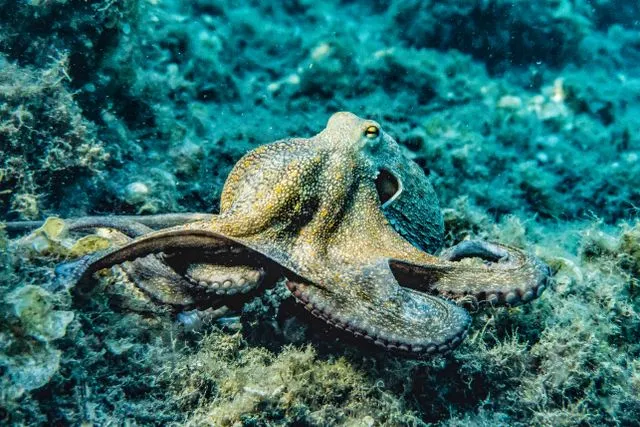
Instant Color and Texture Camouflage
An octopus is a living master of disguise! Specialized cells in its skin called chromatophores contain pigments that expand and contract in milliseconds. This allows the octopus to change its color to match nearby rocks, sand, or colorful coral reefs instantly.
To make the disguise even more convincing, tiny muscles in their skin called papillae can transform their smooth body into a bumpy, rough texture. A predator can swim right past an octopus sitting in plain sight without ever noticing it!
-
Chromatophores: Special color-changing skin cells that allow instant color shifts.
-
Textured Skin: Muscles change skin texture from smooth to bumpy to match coral.
-
Visual Tricking: Helps them vanish into the background before a predator even spots them.
The Smoke Screen Ink Escape
When an octopus is spotted by a predator, it uses a classic superhero escape tool: an ink cloud! The octopus sprays a dark mixture of melanin and mucus from its siphon directly into the water.
This dark cloud creates an instant smoke screen that blocks the predator’s sight. The ink also contains special chemical compounds that confuse the predator’s sense of smell, making it impossible for a shark or eel to track the escaping octopus!
Did You Know? 🌟
An octopus can squeeze through any opening as long as its hard, parrot-like beak can fit through! Because an octopus has zero bones in its body, a large 10-pound octopus can squeeze through a hole the size of a coin!
Squeezing Into Tiny Underwater Hideouts
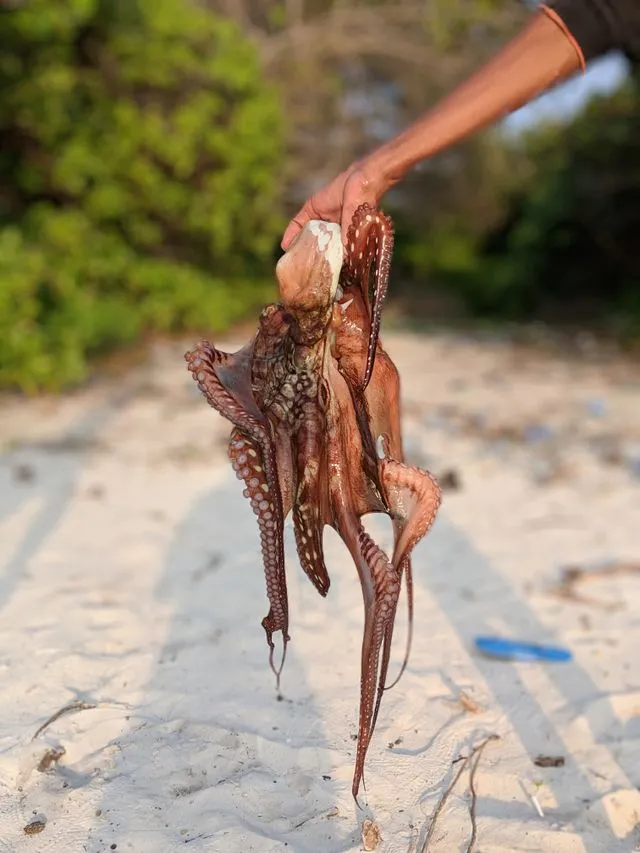
Because octopuses are invertebrates with no internal skeleton or outer shell, their soft bodies are incredibly flexible. They can bend, twist, and flatten themselves to slide into tiny rock cracks on the seafloor.
Once inside a narrow crevice, the octopus is completely safe from larger predators that cannot fit into the tight space. Some octopuses even drag heavy clam shells or coconut shells over the opening to build a secret locked door!
Shape-Shifting Mimic Tricks
Some species take deception to a whole new level! The famous mimic octopus (Thaumoctopus mimicus) living in Southeast Asia can alter its shape, swimming style, and color pattern to copy dangerous sea creatures.
If a territory-guarding fish comes too close, the mimic octopus can tuck its arms together to look like a venomous sea snake or spread its arms wide to resemble a prickly lionfish!
Octopus vs. Hard-Shelled Crab Defense
Octopus Defense:
Has a completely soft body with no bones; relies on instant camouflage, ink smoke screens, and extreme flexibility to hide.
Crab Defense:
Has a hard, heavy exoskeleton suit of armor and sharp claws to fight off predators head-on.
Myth vs. Fact
| Myth | Fact |
| ❌ Myth: An octopus can only change its skin color to brown or gray. | ✅ Fact: Many species can shift between red, yellow, pink, blue, white, and complex patterns! |
| ❌ Myth: Octopus ink is poisonous to humans. | ✅ Fact: Octopus ink is harmless to humans and is even used as a food ingredient in some pasta dishes! |
| ❌ Myth: Octopuses use their ink to kill predators. | ✅ Fact: The ink is used as a temporary distraction so the octopus can jet away safely. |
Quick Fun Facts
-
Octopuses have three hearts and their blood is bright blue because it uses copper to transport oxygen!
-
Scientists discovered that two-thirds of an octopus’s neurons are located in its eight arms rather than its brain, allowing its arms to sense and act independently.
-
When escaping fast, an octopus shoots water out of a muscle tube called a siphon, using high-speed jet propulsion!
-
An octopus can shed a trapped arm to escape a predator and fully regrow a new one later.
Quick Quiz
What hard body part determines how small of a gap an octopus can squeeze through?
-
A) Its hard elbow joints
-
B) Its parrot-like beak ✅
-
C) Its tough suction cups
-
D) Its thick skull bone
Critter Challenge
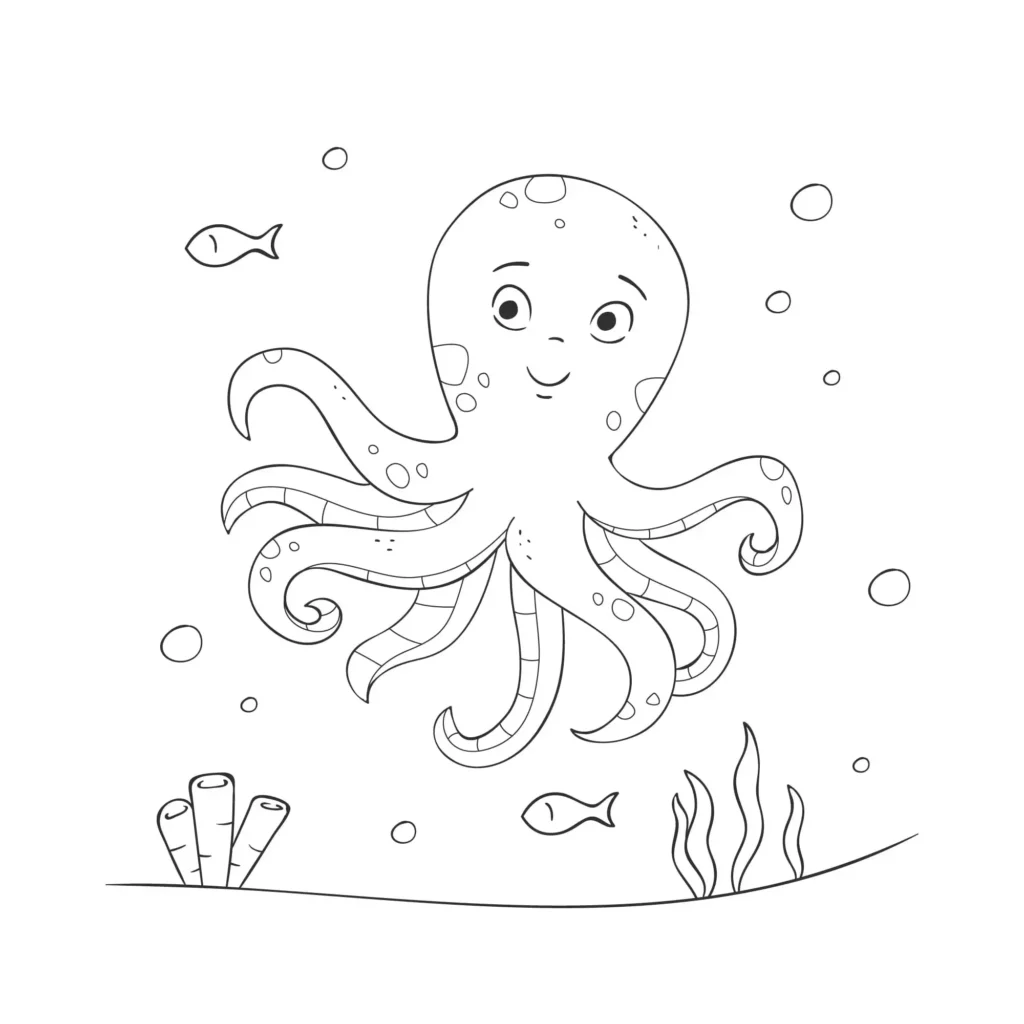
Try squeezing through a cardboard box tunnel at home or school! Draw a picture of an octopus squeezing through an underwater rock crevice for your next school science report!
Frequently Asked Questions
An octopus produces ink in a special pouch near its digestive system. When threatened, it squeezes the ink sac and squirts the dark fluid out through its siphon using a blast of water!
Yes! If a predator bites or traps one of an octopus's arms, the octopus can break off the limb to escape. Over the next few months, special stem cells work to regenerate a fully functional new arm!
Human blood uses iron-based hemoglobin to carry oxygen, which makes it red. Octopus blood uses copper-based hemocyanin to carry oxygen in cold, ocean environments, which turns their blood blue!
An octopus can shoot through the water at speeds of up to approximately 40 km/h (25 mph) in short bursts by blasting water through its siphon tube!
CritterScore
⚡ Stealth & Camouflage: ⭐⭐⭐⭐⭐(5/5)
🧠 Intelligence: ⭐⭐⭐⭐⭐(5/5)
🛡️ Defense Power: ⭐⭐⭐⭐⭐(5/5)
🏃 Escape Speed: ⭐⭐⭐⭐(4/5)
🏆 Winner Line: The ultimate ocean shapeshifter that vanishes in a puff of smoke before predators even know what happened!
Conclusion
Octopuses escape predators using a brilliant mix of color-changing camouflage, blinding ink clouds, and extreme flexibility. By relying on smart tricks instead of heavy armor, these soft-bodied marine creatures remain some of the safest and cleverest animals in the deep blue sea.
To explore more amazing animal survival tricks, check out our fun guides on the Why Do Squirrels Bury Nuts? The Survival Strategy Explained and Do Elephants Mourn Their Dead? The Simple Truth for Kids!.