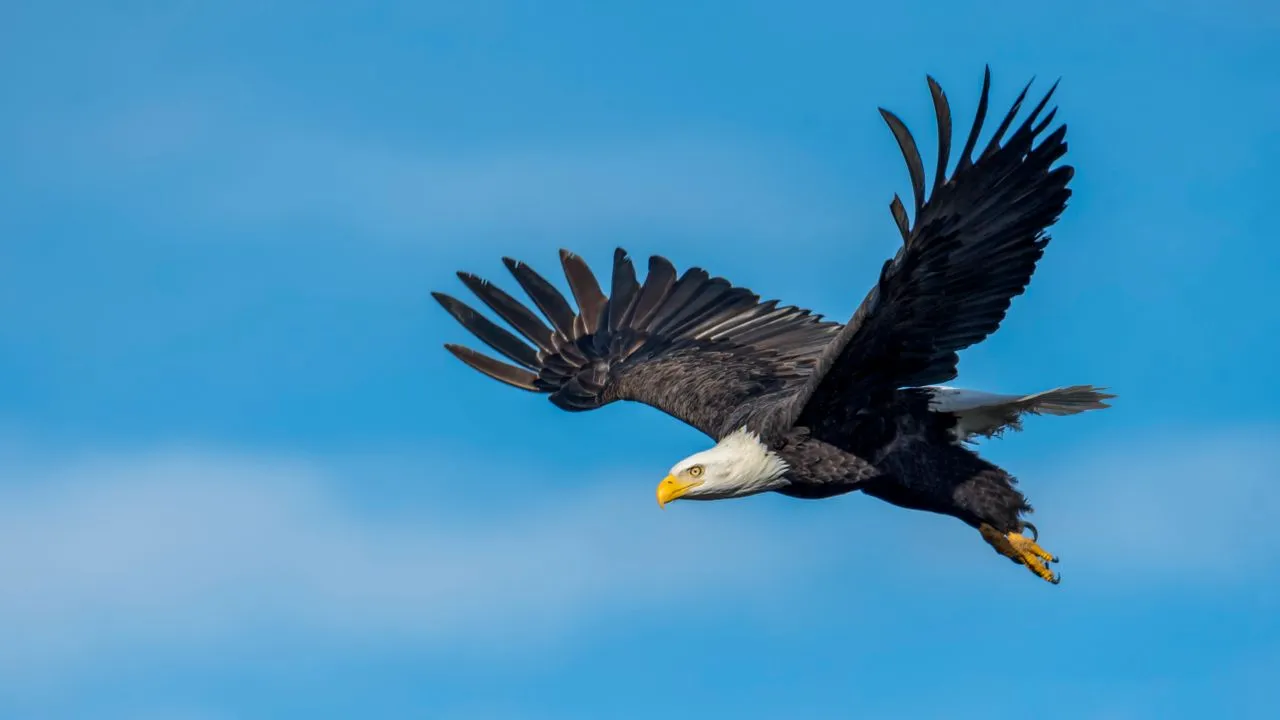
Eagles can see much farther and resolve more detail than humans can. Bald eagles are commonly reported to have visual acuity around 20/4 to 20/5, compared with normal human 20/20 vision. That means a bald eagle can resolve details at a distance where a person with normal eyesight would need to be much closer.
But there isn’t one exact distance that answers how far every eagle can see. A tiny insect, a mouse, and a rabbit are obviously much easier to detect at different distances.
Imagine standing on the ground and looking up at an eagle circling high above you. From that distance, it may look like the bird is simply riding the wind.
But an eagle is doing something very different.
Its eyes are built to pick out small details from far away, track moving objects, judge distance, and quickly change focus while flying. Compared with human vision, an eagle’s visual system is remarkably specialized for hunting and survival.
So, how far can an eagle actually see?
The answer depends on the species, the size of the object, weather, lighting, and what scientists mean by “see.” But some bald eagle sources report that they can spot rabbit-sized prey from roughly three miles away under suitable conditions.
Vision: Extremely sharp long-distance vision
Compared with humans: Often reported around 20/4–20/5 in bald eagles
Field of view: Around 340° has been reported for bald eagles
Foveae: Bald eagles have two deep foveae, supporting detailed vision
Color vision: Includes ultraviolet sensitivity
Focus: Their eyes can rapidly adjust focus
Special protection: A transparent third eyelid helps protect the eye
1. How Much Better Is Eagle Vision Than Human Vision?
Humans with normal eyesight are often described as having 20/20 vision.
Bald eagles have been reported to have approximately 20/4 or 20/5 vision. In simple terms, this means an eagle can resolve fine details from farther away than a person with typical eyesight.
Think of it this way:
If you and an eagle were looking at the same distant object, the eagle could potentially distinguish details that would appear much less clear to you.
That’s especially useful for a predator that spends much of its time scanning large areas from the air.
2. So, How Far Can an Eagle See?
This is where the popular numbers need some context.
Eagle Wing Tours reports that bald eagles can spot prey roughly the size of a rabbit from about three miles away.
The Raptor Resource Project gives several examples of the impressive resolving ability attributed to bald eagle vision, including reports of resolving a mouse from hundreds of feet away and a rabbit from more than two miles away.
These figures should not be treated as a single guaranteed “maximum viewing distance.”
Why?
Because vision depends on many things:
- Object size
- Contrast against the background
- Weather
- Lighting
- Distance
- Movement
- The eagle’s viewing angle
- Whether we’re talking about detecting something or actually resolving its details
So saying “an eagle can see exactly three miles” is too simple.
A better way to put it is:
Eagles can detect and resolve objects at distances where normal human vision would struggle, with some sources reporting rabbit-sized prey visible from several miles away.
3. Why Are Eagle Eyes So Powerful?
An eagle’s eyes aren’t simply bigger versions of human eyes.
Their shape and internal structure are adapted for detailed vision.
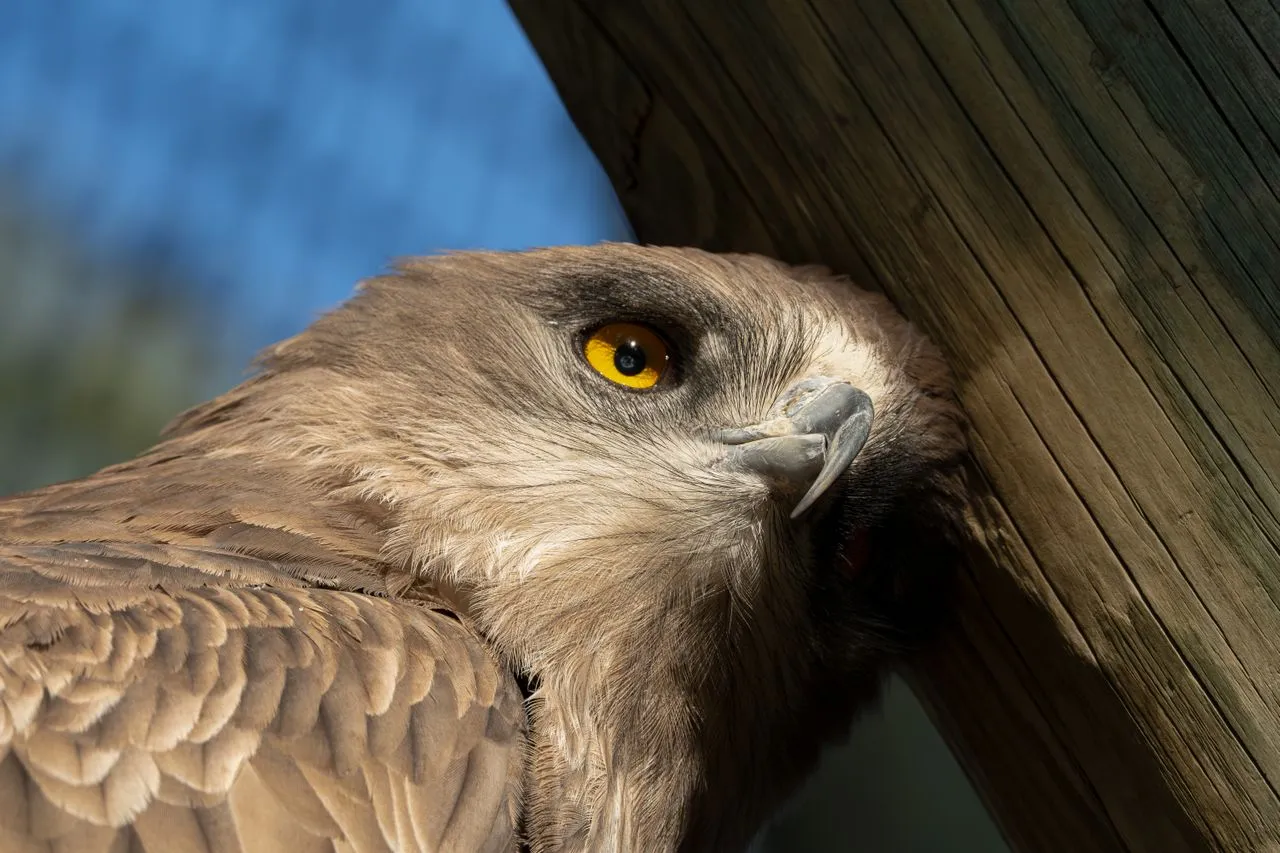
The Raptor Resource Project explains that bald eagle eyes have a somewhat tubular shape and large corneas and lenses. These structures help create large, sharp images on the retina.
Their visual system is particularly useful when an eagle needs to switch between looking across a distant landscape and focusing on something closer while moving through the air.
4. Eagles Have Two Foveae
Here’s one of the most interesting parts of eagle vision.
Humans have a central region of the retina called the fovea, which is important for detailed central vision.
Bald eagles have two deep foveae. According to the Raptor Resource Project, one supports detailed monocular vision while another contributes to binocular vision.
This gives the eagle different ways to process visual information.
Monocular vision
Each eye can gather information independently.
This can be useful when scanning a wide area for movement.
Binocular vision
Both eyes contribute to the same visual target.
This helps with judging depth and distance—important when an eagle is approaching prey or navigating around obstacles.
5. Eagles Can See More Than the Colors We Do
Human vision relies mainly on three types of color-sensitive cones.
Birds of prey have a more complex visual system.
The Raptor Resource Project explains that bald eagles have a fourth type of cone that allows sensitivity into the ultraviolet (UV) part of the spectrum. Specialized oil droplets in their cones also help filter light and distinguish different wavelengths.
This means an eagle’s visual experience isn’t simply a sharper version of what humans see.
The world may contain visual information that is simply unavailable to us.
6. How Does Eagle Vision Help With Hunting?
Sharp eyesight is useful only if the eagle can turn visual information into action.
When hunting, an eagle may need to:
- Scan a large area.
- Detect movement.
- Identify a potential prey animal.
- Focus on the target.
- Judge distance.
- Adjust its flight.
- Approach with its talons ready.
That combination of vision and flight control is what makes eagle eyesight so effective.
An eagle isn’t simply “seeing farther.” Its eyes are helping it make decisions while moving through a three-dimensional environment.
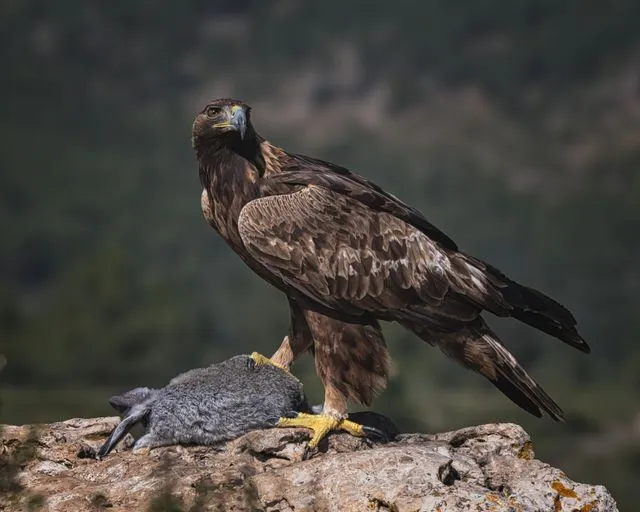
7. Eagles Have a Third Eyelid
Eagles also have an unusual eye-protection system.
They have three eyelids.
The third eyelid is called the nictitating membrane. It is transparent and can move across the eye, helping protect and clean the surface while still allowing the bird to see.
For a bird that flies at speed, hunts, and deals with wind, dust, branches, and other hazards, protecting the eye is extremely important.
Where Do Bald Eagles Live?
The bald eagle is native to North America.
Its range includes much of Canada, the United States, and parts of northern Mexico. Bald eagles are strongly associated with areas near water because fish and other aquatic prey can be important parts of their diet.
Eagle Vision vs Human Vision
| Feature | 🦅 Bald Eagle | 👁️ Human |
|---|---|---|
| Visual acuity | Often reported around 20/4–20/5 | Normal human vision around 20/20 |
| Foveae | Two deep foveae | One main fovea |
| UV sensitivity | Yes | No |
| Field of view | About 340° has been reported | About 180° |
| Focus | Highly specialized for rapid visual changes | Less specialized for aerial hunting |
| Third eyelid | Present | Present as a small remnant, not a functional transparent third eyelid |
| Hunting vision | Specialized for detecting and tracking prey | Not specialized for hunting from the air |
The exact numbers can vary depending on the species, measurement method, and source, so these comparisons are best treated as general descriptions rather than perfectly matched laboratory measurements.
Myth vs Fact
| ❌ Myth | ✅ Fact |
|---|---|
| Eagles can see everything from any distance. | Their vision is extremely sharp, but visibility still depends on distance, object size, lighting, weather, and contrast. |
| An eagle can always see exactly three miles. | Some sources report rabbit-sized prey at around three miles, but there is no single maximum distance that applies to every situation. |
| Eagles only see in normal human colors. | Bald eagles have visual adaptations that include ultraviolet sensitivity. |
| Eagle eyes are just bigger human eyes. | Their eyes have specialized structures, including two foveae, that support their visual abilities. |
| Eagles have only two eyelids. | They also have a transparent nictitating membrane that acts as a third eyelid. |
Quick Fun Facts
🦅 Bald eagle eyes are very large relative to their skull.
👀 Their vision is often compared with 20/4–20/5 human-style acuity.
🔭 Some sources report rabbit-sized prey being detected from several miles away.
🌈 Bald eagles can detect ultraviolet wavelengths.
👁️ They have two deep foveae.
🛡️ Their transparent third eyelid helps protect the eye.
🎯 Their visual system helps them judge depth while hunting and flying.
Quick Quiz
Why are an eagle’s two foveae useful?
A. They help the eagle breathe underwater
B. They help the eagle process visual information in different ways
C. They make the eagle’s feathers waterproof
D. They help the eagle produce sound
✅ Correct Answer: B — They help the eagle process visual information in different ways
Critter Challenge
Next time you look across a large open area, pick a small object in the distance—a bird, tree branch, or sign.
Ask yourself:
Could I still identify that object if it were several times farther away?
An eagle’s hunting lifestyle depends on doing something similar from the air, but with eyes specially adapted for long-distance detail.
That’s what makes eagle vision so fascinating.

Frequently Asked Questions
How far can an eagle see?
There is no single scientifically established maximum distance for all eagles. Some sources report that bald eagles can spot rabbit-sized prey from around three miles away under suitable conditions.
Can an eagle see better than a human?
Yes. Bald eagles are reported to have much sharper visual acuity than humans, often around 20/4–20/5 compared with normal human 20/20 vision.
Can eagles see ultraviolet light?
Bald eagles have a fourth cone type that provides sensitivity into the ultraviolet range, according to the Raptor Resource Project’s explanation of avian vision.
Why do eagles need such powerful eyesight?
Their eyesight helps them detect potential prey, track movement, judge distance, and navigate while flying. Their eyes are specialized for collecting and processing detailed visual information.
CritterScore
Visual Acuity: ⭐⭐⭐⭐⭐(5/5)
Long-Distance Detection: ⭐⭐⭐⭐⭐(5/5)
Depth Perception: ⭐⭐⭐⭐⭐(5/5)
Color & UV Vision: ⭐⭐⭐⭐⭐(5/5)
Eye Protection: ⭐⭐⭐⭐⭐(5/5)
🏆 Standout Ability: Long-Distance Vision & Detail Detection
Final Thoughts
An eagle doesn’t need binoculars to scan the landscape below. Its eyes are already built for the job.
From unusually sharp visual acuity and specialized foveae to ultraviolet sensitivity and a protective third eyelid, eagle vision is a remarkable example of how an animal’s body can evolve around the way it lives.
And while the popular “three miles away” claim makes for a great headline, the more interesting story is what happens inside the eye. Eagles don’t simply see farther-they have a visual system designed to gather, focus, and process a huge amount of information while they’re moving through the sky.
If you’re curious about other animals with unusual abilities, take a look at How Do Owls Hunt in Complete Darkness?. And if you want to explore more fascinating animal senses and survival skills, keep exploring CritterPages. 🐾
Sources & References
Britannica – How far can an eagle see compared to a human?
Eagle Wing Tours – Nine bald eagle facts that may surprise you!
InSight Vision Center – Eagle Vision vs. Human Vision: How to Compare?
Raptor Resource Project – Eagle Eyes!