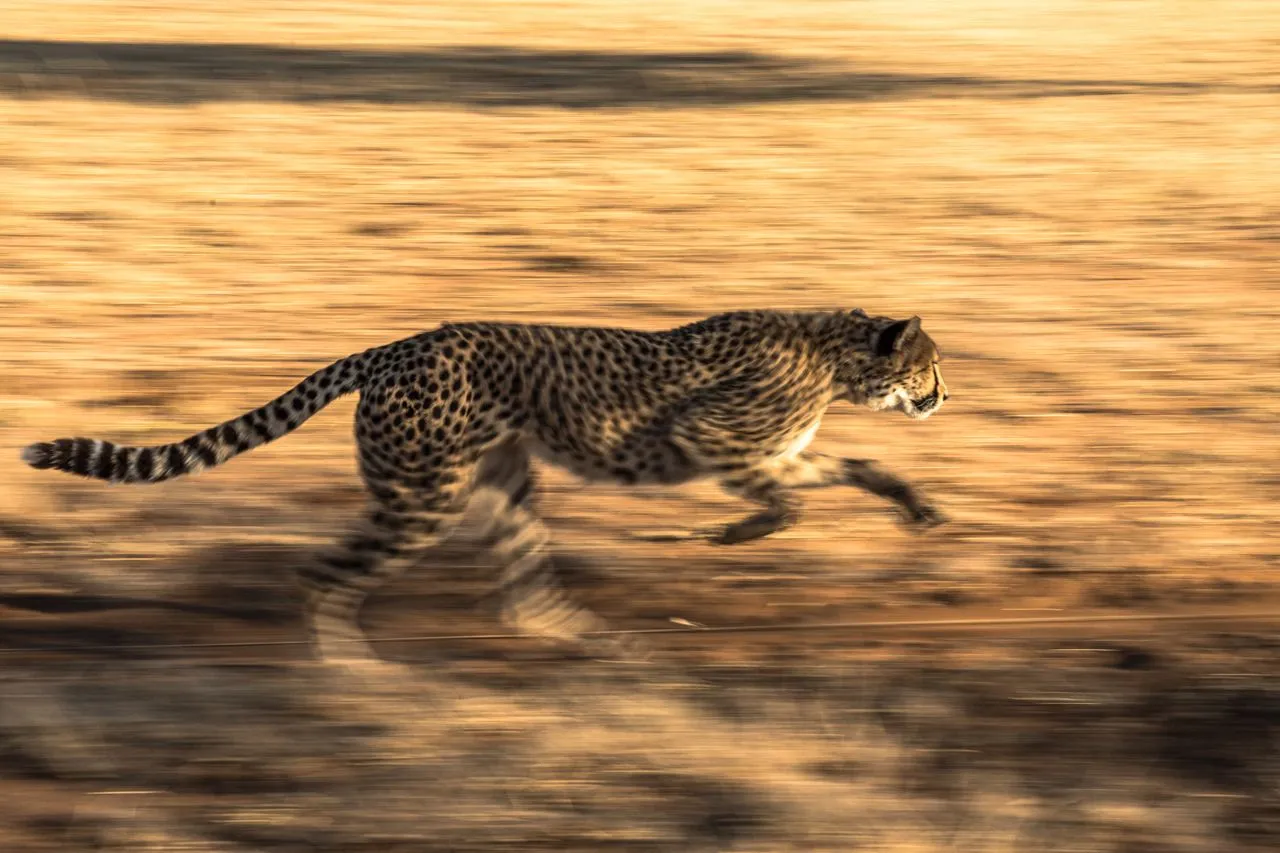
A cheetah can reach around 96–112 km/h (60–70 mph) in short bursts. It is the fastest land mammal, but it cannot maintain that speed for long.
If you have ever watched a cheetah run, you probably noticed something unusual.
It doesn’t look like an animal simply running faster and faster. Its whole body seems to stretch out with every stride-the legs reaching forward, the back flexing, and the tail moving behind it like a balancing pole.
That is what makes the cheetah so interesting.
It isn’t just fast because it has strong legs. Almost its entire body is built around one job: short, explosive bursts of speed.
Key Facts
Top speed: About 96–112 km/h (60–70 mph)
🏃 Speciality: Short-distance acceleration and sprinting
🌍 Main range: Sub-Saharan Africa, with a tiny surviving population of Asiatic cheetahs in Iran
🦴 Built for speed: Long limbs, flexible spine, lightweight body, and specialized paws
1. How Fast Is a Cheetah Really?
The numbers you often see online can make cheetahs sound almost unreal.
Smithsonian’s National Zoo gives a top-speed range of roughly 60–70 mph (96–112 km/h). It also notes that a cheetah can accelerate from 0 to 45 mph (72 km/h) in about 2.5 seconds.
But there is an important detail here.
A cheetah isn’t running at 110 km/h for several minutes. These are short sprints. Smithsonian notes that top speed can be maintained only for a limited distance, while full hunting runs are much shorter.
And when researchers tracked wild cheetahs in Botswana, the fastest recorded run in that study was about 93 km/h (58 mph). Interestingly, most hunting runs did not involve the cheetah reaching its absolute maximum speed.
That makes sense when you think about hunting. Catching prey isn’t just about running in a straight line.
2. Long Legs and a Flexible Spine
One of the biggest secrets behind cheetah speed is its body shape.
Cheetahs have relatively long limbs and a very flexible spine. When the animal runs, the spine flexes and extends, helping increase the distance covered by each stride. Their shoulder blades also move in a way that helps lengthen the effective stride.
Research comparing cheetahs with racing greyhounds found that cheetahs rely heavily on longer strides, rather than simply taking more steps per second.
Think of it like this:
A human trying to run faster might increase their stride frequency.
A cheetah gets an extra advantage from making each stride cover a remarkable amount of ground.
Did You Know?
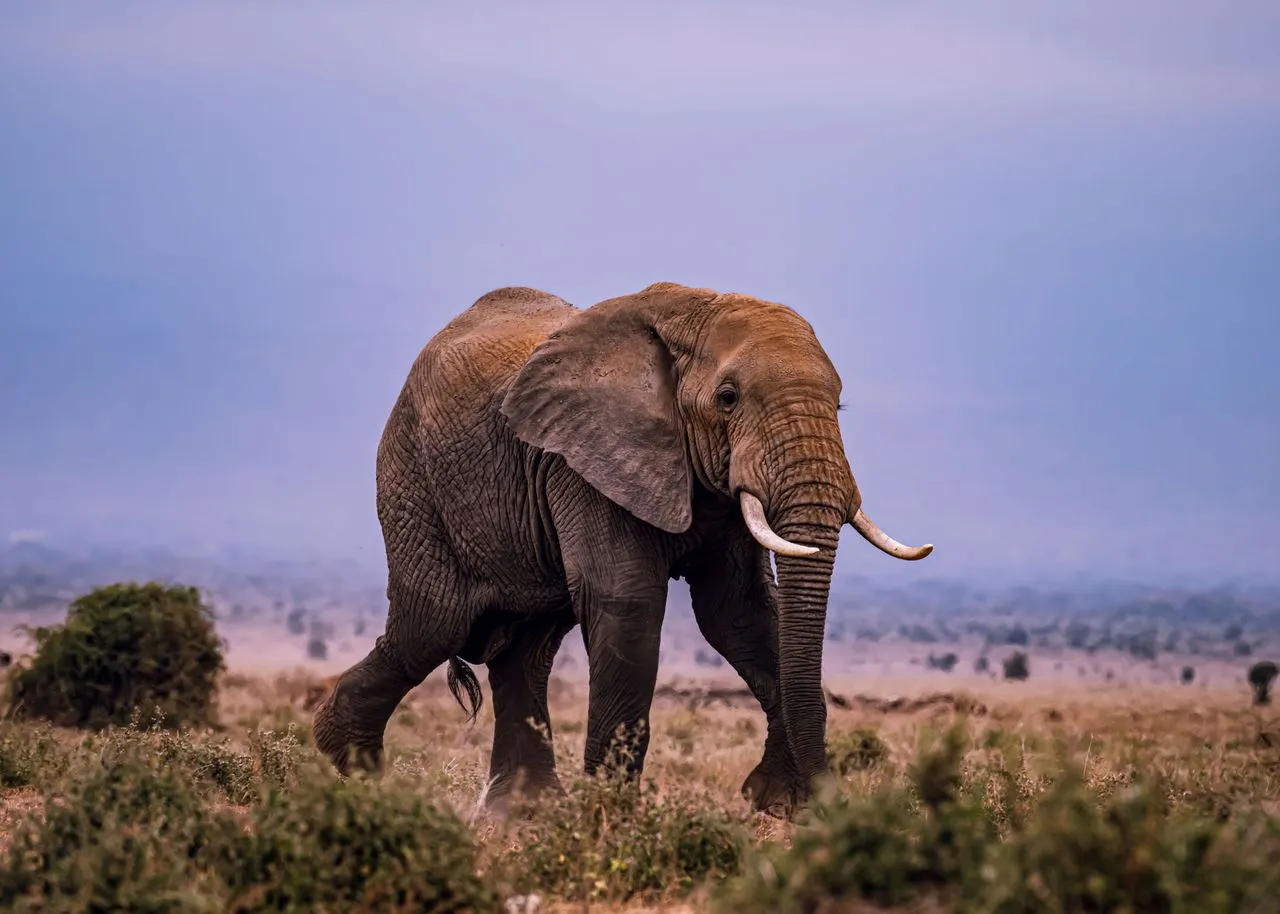
A detailed 2023 study found around 90,000 muscle fascicles throughout an Asian elephant trunk. These tiny muscle units help explain how the trunk can be both powerful and precise.
3. Their Paws Are Built for Traction
Speed is useless if you can’t stay upright.
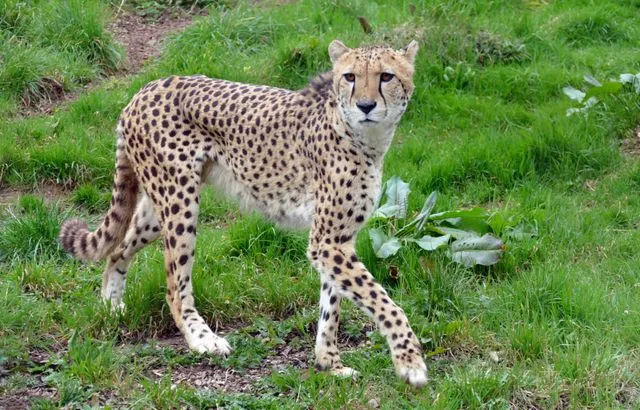
Cheetahs have semi-retractable claws and specialized paw pads that help provide traction while running. Their claws don’t retract as completely as those of many other cats, which helps them grip the ground.
This is also why a cheetah’s footprint can look surprisingly different from that of a lion or leopard.
The claws can leave visible marks.
That extra grip becomes especially important when the cheetah suddenly changes direction during a chase.
4. The Tail Works Like a Rudder
Imagine running as fast as you possibly can and then suddenly needing to turn.
That is difficult for any animal.
A cheetah’s long tail helps with this problem. It acts somewhat like a rudder, helping the animal balance and control its body during rapid movements and turns.
Researchers studying wild cheetah hunts have found that these chases involve much more than straight-line speed. Cheetahs accelerate, slow down, and make quick directional changes depending on how their prey moves.
So the real skill isn’t simply:
“Run as fast as possible.”
It’s more like:
“Accelerate, turn, adjust, and catch the prey before the sprint ends.”
5. How Does a Cheetah Handle Such a Fast Sprint?
Running at extreme speed requires a huge amount of oxygen and energy.
Cheetahs have relatively large nasal passages and lungs that help with rapid air intake while running. Their cardiovascular system also supports the intense physical effort of a chase.
But there is a trade-off.
A cheetah’s body is optimized for speed rather than fighting. Compared with larger cats such as lions, cheetahs have smaller teeth and are physically less suited to confrontations. After catching prey, they can also lose their meal to stronger predators.
Being the fastest doesn’t make the cheetah the strongest.
It has a different strategy.
Run first. Fight only when necessary.
6. Where Do Cheetahs Live?
Most wild cheetahs now live in sub-Saharan Africa, especially in parts of eastern and southern Africa.
Important populations occur in countries such as Kenya, Tanzania, Namibia, and Botswana. A small surviving population of Asiatic cheetahs remains in Iran.
Cheetahs prefer areas where they can use their speed, including open grasslands and savannas, although they can also live in other habitats.
Their historical range was much larger than it is today, and habitat loss and other human-related pressures have greatly reduced their distribution.
🗺️ Map placement: Add a range map here showing the present-day distribution of African cheetahs and the small Asiatic cheetah population in Iran.
A Cheetah’s Desperate Move | Lion Kingdom – National Geographic
🌟 A Famous Cheetah: Khayam
One cheetah became particularly well known in the world of wildlife research.
Khayam, a captive cheetah at the Cincinnati Zoo, became famous for his role in research on cheetah locomotion. Researchers used him to study how cheetahs move at high speed and what makes their running style so unusual.
That kind of research helped scientists understand that cheetah speed isn’t simply about having powerful muscles. Their bones, limbs, spine, and movement all work together.
Khayam’s contribution is a good example of how studying one individual animal can teach us much more about an entire species.
What Makes a Cheetah So Fast?
| Body Feature | How It Helps |
|---|---|
| 🦵 Long limbs | Help create long strides |
| 🦴 Flexible spine | Extends the stride during a sprint |
| 🐾 Semi-retractable claws | Improve traction |
| 🌀 Long tail | Helps with balance and turning |
| 🫁 Large nasal passages and lungs | Support rapid breathing during intense running |
| 💪 Powerful muscles | Provide acceleration and propulsion |
Myth vs Fact
| ❌ Myth | ✅ Fact |
|---|---|
| A cheetah can run at top speed for several minutes. | Its highest speeds are limited to short bursts. |
| Speed is the only reason cheetahs catch prey. | Cheetahs also rely on acceleration, turning ability, stealth, and timing. |
| Cheetahs are the strongest big cats. | Their bodies are specialized for speed rather than fighting strength. |
| Cheetahs always reach their maximum speed when hunting. | Wild tracking studies show that many hunts happen below maximum speed. |
Quick Fun Facts
- A cheetah can accelerate extremely quickly, reaching about 72 km/h in around 2.5 seconds.
- A cheetah’s tail helps it control sharp turns.
- Its claws are semi-retractable rather than fully retractable.
- Cheetahs don’t roar like lions; they can purr, chirp, bark, growl, and hiss.
- Wild cheetahs don’t always need their maximum speed to catch prey.
Quick Quiz
Which body part helps a cheetah control its direction during a high-speed chase?
A. Ears
B. Tail
C. Whiskers
D. Nose
✅ Correct Answer: B — Tail
Critter Challenge
Watch a short video of a cheetah running and focus on its back.
Can you notice how much the spine bends and stretches during each stride?
Then watch the tail. See how it moves when the cheetah changes direction.
CritterScore
Speed: ⭐⭐⭐⭐⭐(5/5)
Acceleration: ⭐⭐⭐⭐⭐(5/5)
Agility: ⭐⭐⭐⭐⭐(5/5)
Traction: ⭐⭐⭐⭐(4/5)
🏆 Winner: Speed & Acceleration
FAQ
How fast can a cheetah run?
Cheetahs can reach roughly 96–112 km/h (60–70 mph) in short bursts.
How long can a cheetah maintain top speed?
Only for a short period. A maximum-speed sprint places enormous demands on the animal’s body, so cheetahs rely on brief bursts rather than long-distance running.
Why do cheetahs run so fast?
Their speed helps them catch fast-moving prey such as gazelles and other small to medium-sized animals. Their hunting strategy combines stealth, acceleration, speed, and rapid changes of direction.
Are cheetahs faster than lions?
Yes, cheetahs are much faster over a short sprint. Lions are larger and more powerful, while cheetahs are specialized for speed and acceleration.
Conclusion
A cheetah’s speed is impressive, but the real story is everything working behind it.
Its long legs cover ground quickly, its flexible spine helps stretch each stride, its paws grip the ground, and its tail helps control sudden turns. Put all those features together and you get an animal built for one of nature’s most demanding jobs: a short, explosive chase.
The cheetah doesn’t need to stay the fastest for long.
It just needs to be fast enough to catch its meal.
Sources & References
Cheetah – The cheetah is the world’s fastest.
National Geographic – https://www.nationalgeographic.com/animals/article/Animal-speed-size-cheetahs
Hudson et al., Journal of Experimental Biology – High-speed galloping in cheetahs and racing greyhounds.
Hudson et al., Journal of Anatomy – Functional anatomy of the cheetah’s limbs.
Wilson et al., Journal of Experimental Biology – Cheetah turning and pursuit behavior.