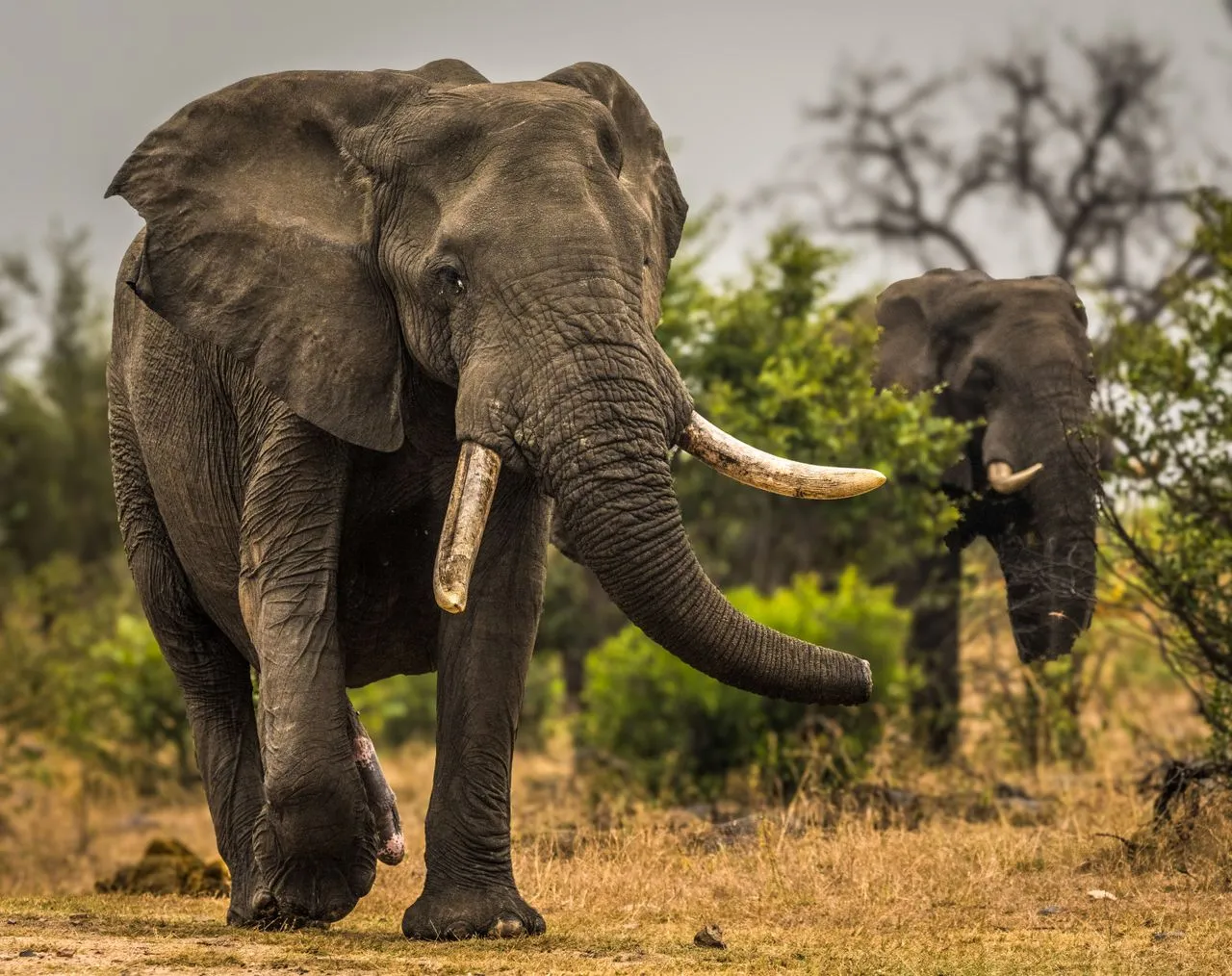
Elephants are among the strongest land animals, but their strength isn’t just about pushing or lifting heavy objects. Their huge bodies, powerful legs, and especially their muscular trunks allow them to move, carry, pull, and handle objects with surprising control.
An elephant doesn’t need to prove how strong it is.
Just watching one move a fallen branch, push through thick vegetation, or pull something with its trunk gives you an idea of the power packed into that enormous body.
But there’s something even more interesting about elephant strength. Their trunk isn’t simply a strong “arm.” It is a remarkably flexible muscular organ that can handle both heavy objects and surprisingly delicate tasks.
So, how strong is an elephant really?
The answer depends on what kind of strength we’re talking about.
Key Facts
🐘 Largest land animal: African elephants are the largest living land animals.
💪 Main source of strength: Large body muscles, powerful legs, and the muscular trunk.
🌿 Daily use: Moving vegetation, carrying food, pushing objects, digging, and handling materials.
👃 Special ability: The trunk combines strength with extremely precise movement.
1. Where Does an Elephant Get Its Strength?
An elephant’s enormous size is part of the story.
Their legs have to support a huge body while also allowing the animal to walk, turn, climb slopes, and push against objects. Research on Asian elephant locomotion has found that elephants can weigh up to around 5 tonnes, with some reaching about 3 metres at the shoulder.
That doesn’t mean an elephant is simply a giant muscle machine. Large body size comes with mechanical challenges too. Supporting such a massive body requires specially adapted bones, joints, muscles, and movement patterns.
Their strength is therefore a combination of size, muscle, body structure, and coordination.
2. The Trunk Is Their Most Remarkable Tool
If elephants had a “superpower,” their trunk would be a strong candidate.
The trunk contains a highly complex network of muscle structures and can bend, stretch, twist, grip, and manipulate objects without bones inside it. Scientists describe it as a muscular hydrostat—a flexible muscular structure that can change shape while producing force.
And the trunk isn’t only useful for heavy work.
Elephants can use it to pick up food and manipulate small objects. Studies have even shown that elephants change how they use their trunk depending on the size and weight of what they are handling.
Did You Know?
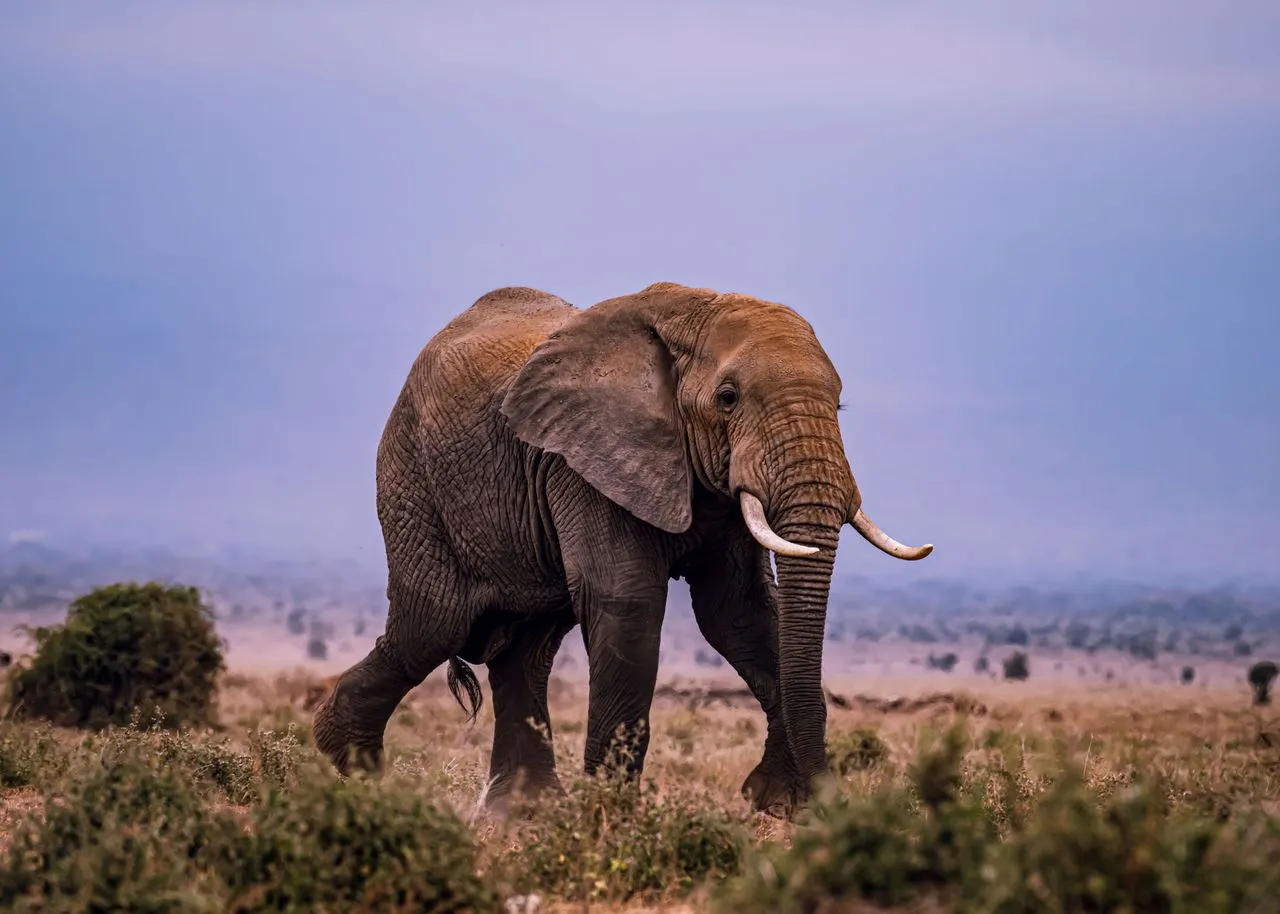
A detailed 2023 study found around 90,000 muscle fascicles throughout an Asian elephant trunk. These tiny muscle units help explain how the trunk can be both powerful and precise.
3. How Much Can an Elephant Lift?
This is where many online elephant facts become confusing.
You may see claims saying elephants can lift a specific huge number of kilograms with their trunks. But the exact amount depends on the elephant, the object, how it is held, and the way the force is measured.
Scientists have actually tested elephant trunk strength under controlled conditions.
In one experiment, an African elephant was trained to lift weights between 20 and 60 kilograms using only its trunk. The researchers found that the elephant changed its posture and wrapping strategy as the weight increased.
That’s a much more useful way to understand elephant strength than simply repeating one impressive number.
The trunk is not a crane with one fixed lifting limit. It is a flexible biological tool that adjusts its grip depending on the job.
4. Strong Enough for Heavy Work, Precise Enough for Small Objects
Here’s the part that makes elephant strength especially interesting.
Being strong is one thing. Being strong and precise at the same time is much harder.
Elephants can use their trunks to move heavy objects, but they can also manipulate food and pick up relatively small pieces.
Researchers studying elephant trunk mechanics have found that elephants can adjust the force they apply when handling objects of different sizes and weights.
This combination of power and control is one reason elephant trunks have attracted attention from robotics researchers.
Engineers are interested in creating soft robotic arms that can imitate the flexibility and gripping abilities of an elephant trunk.
5. Where Do Elephants Live?
Elephants are naturally found in Africa and Asia.
African elephants live across parts of sub-Saharan Africa, while Asian elephants are found in parts of South and Southeast Asia.
Their habitats include savannas, forests, grasslands, and other environments depending on the species and region.
🗺️ Map placement: Add a world map here showing the current natural ranges of African and Asian elephants.
6. What About Their Tusks?
Tusks are another source of physical power, but they aren’t simply weapons.
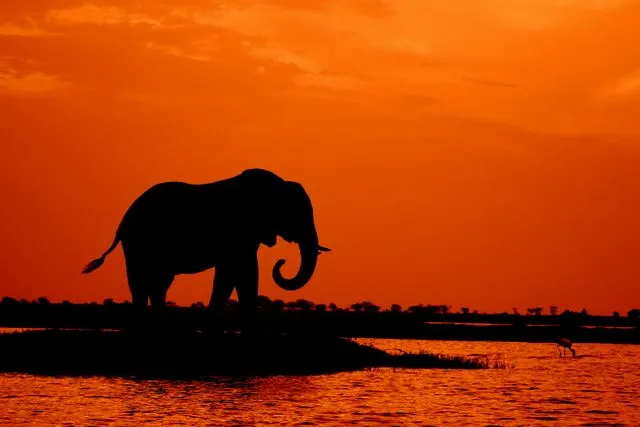
Elephants use their tusks for tasks such as digging, stripping bark, moving objects, and competing with other elephants.
Tusks are actually elongated incisor teeth.
Their usefulness depends on the situation. An elephant may use its trunk for flexible manipulation while using its tusks for jobs that require a hard, strong structure.
Together, the trunk and tusks give elephants an unusual combination of flexibility and physical power.
A Famous Elephant: Jumbo
One elephant became famous far beyond the forests and savannas where elephants naturally live.
Jumbo, an African elephant, became a major attraction in the 19th century and was especially famous after being displayed at the London Zoo and later brought to the United States.
His name became so closely associated with great size that “jumbo” eventually entered everyday English as a word meaning very large.
Jumbo’s story is also a reminder that famous individual animals can become part of human history—and that their lives can raise important questions about how wild animals should be treated.
Visual Breakdown: What Makes an Elephant Strong?
| Feature | What It Does |
|---|---|
| 💪 Powerful muscles | Produce force for movement and physical tasks |
| 🐘 Huge body | Provides mass and stability |
| 🦵 Strong legs | Support the body and help generate pushing force |
| 👃 Muscular trunk | Lifts, pulls, grips, and manipulates objects |
| 🦷 Tusks | Useful for digging, stripping bark, and moving objects |
Myth vs Fact
| ❌ Myth | ✅ Fact |
|---|---|
| An elephant’s trunk is just a giant nose. | The trunk is a complex muscular organ used for breathing, smelling, feeding, drinking, and manipulating objects. |
| Elephants are strong only because they are huge. | Their strength also comes from specialized muscles, body structure, and coordination. |
| Elephants can lift any extremely heavy object with their trunks. | Trunk strength has limits and depends on the animal, object, grip, and position. |
| A trunk is too strong for delicate work. | Elephants can carefully manipulate surprisingly small food items and objects. |
Quick Fun Facts
Elephants are the largest living land animals.
Their trunks can perform both powerful and delicate movements.
Elephant trunks contain an extraordinary number of small muscle fascicles.
Scientists have studied elephant trunks as inspiration for soft robotics.
Elephants can change their trunk-gripping strategy when handling heavier objects.
Quick Quiz
What makes an elephant’s trunk unusual?
A. It contains bones like a human arm
B. It is made mainly of muscle and can change shape
C. It can only be used for smelling
D. It cannot grip objects
✅ Correct Answer: B — It is made mainly of muscle and can change shape
Critter Challenge
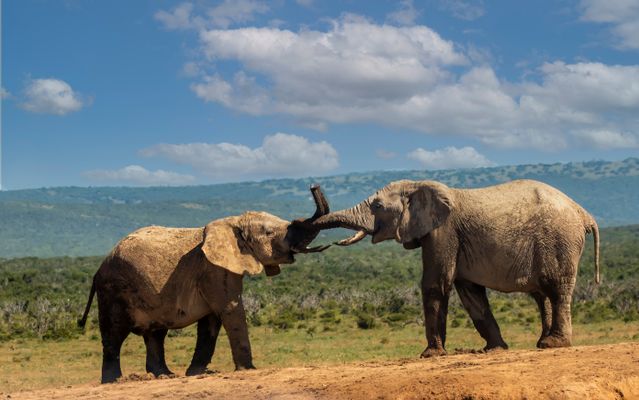
Next time you see an elephant photograph, look closely at its trunk.
Can you spot three different jobs the trunk could perform?
Think beyond lifting. Could it help the elephant eat, smell, drink, communicate, or move something?
FAQ
Are elephants the strongest land animals?
Elephants are certainly among the most powerful land animals, especially because of their enormous body size and muscular trunk. However, there isn’t one scientifically accepted measurement that ranks all land animals by overall strength.
How strong is an elephant’s trunk?
There isn’t one universal maximum. Experiments show that elephants can lift substantial loads with their trunks, and researchers have measured both lifting and gripping forces under controlled conditions.
Can an elephant pick up small objects with its trunk?
Yes. Elephants can adjust their trunk movements and force to handle objects of different sizes, including relatively small pieces of food.
Why are scientists interested in elephant trunks?
The trunk combines flexibility, strength, and precise control without a rigid skeleton. Researchers are studying these properties to help develop more adaptable soft robots.
CritterScore
💪 Physical Strength – ⭐⭐⭐⭐⭐ (5/5)
👃 Trunk Control – ⭐⭐⭐⭐⭐ (5/5)
🦵 Body Power – ⭐⭐⭐⭐⭐ (5/5)
🤏 Precision – ⭐⭐⭐⭐⭐ (5/5)
🏆 Winner: Trunk Power & Control — The elephant’s greatest strength isn’t just how much force it can produce. It’s how well it can control that force.
Sources & References
PubMed – Elephants evolved strategies reducing the biomechanical complexity of their trunk
PubMed – Elephant trunks: Strength and dexterity from mini-fascicles
PubMed – Measuring the force of the tip of the elephants trunk
PubMed – Biomechanics of locomotion in Asian elephants
PubMed – Elephant trunks use an adaptable prehensile grip
Conclusion
An elephant’s strength isn’t just about being big.
Its massive body provides power and stability, its legs support an enormous weight, and its tusks can handle tough physical tasks. But the trunk is what really sets elephants apart. It can produce force while remaining flexible enough to perform delicate movements.
That’s what makes elephant strength so fascinating: power and precision working together in one remarkable animal.