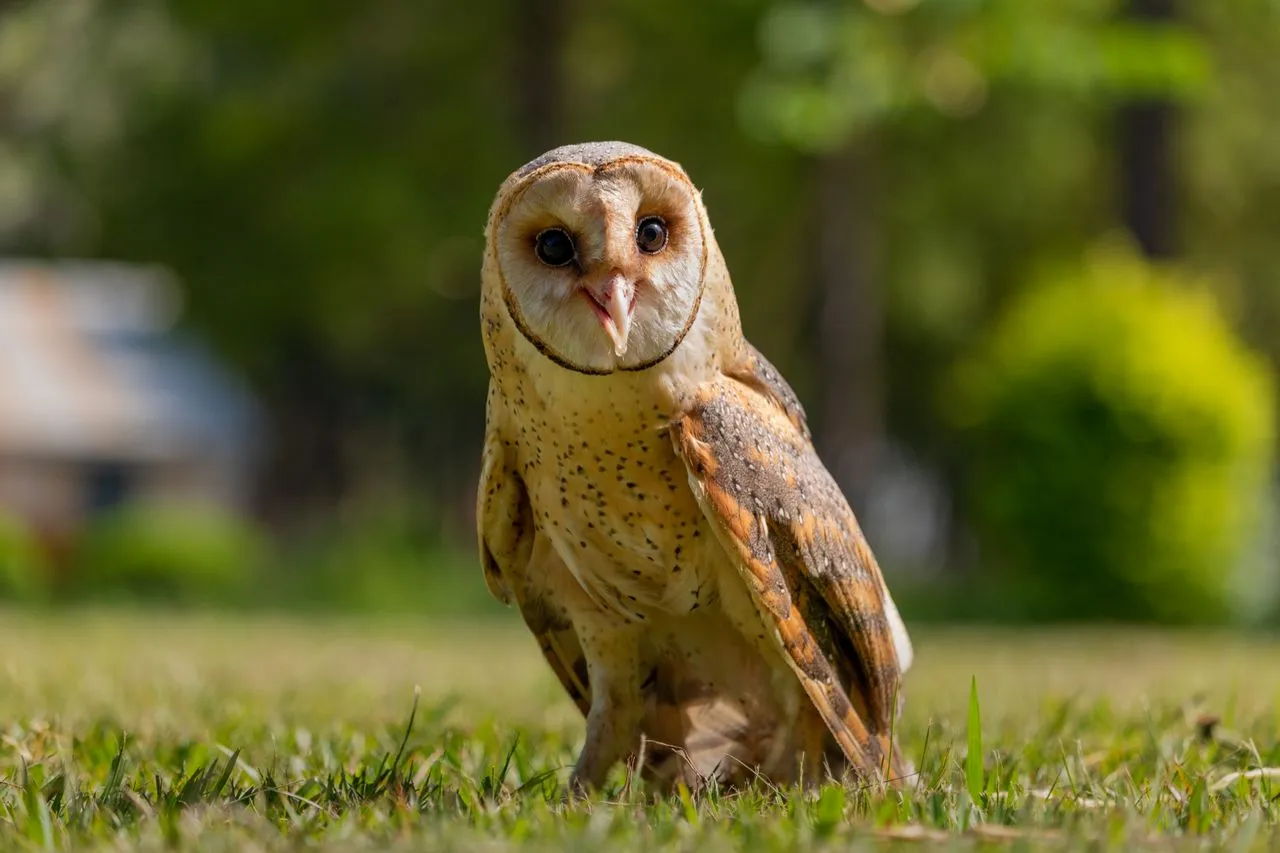
Owls do not rely on a single trick to hunt at night! They combine hyper-sensitive low-light vision, asymmetric auditory systems capable of creating a 3D neural map of sound, serrated wing feathers that allow completely silent flight, and intimate knowledge of their hunting territory to capture prey in complete darkness!
Imagine flying through a pitch-black forest at night, pinpointing the faint rustle of a tiny mouse hidden beneath leaves or snow, and swooping down without making a single sound. For nocturnal owls, this isn’t magic it’s a marvel of evolutionary engineering!
Every night, owls perform incredible aerial strikes in near-total darkness. While other animals struggle to navigate in the dark, owls use a combination of biological sonar, super-powered night vision, and stealth feathers to catch their dinner.
In this guide, you will explore the extraordinary biological adaptations and sensory tools that make owls the ultimate phantom hunters of the night!
Common Nocturnal Hunters: Barn Owl (Tyto alba), Tawny Owl (Strix aluco), Long-Eared Owl (Asio otus)
Preferred Habitats: Woodlands, open grasslands, savannas, and farmlands
Vision Advantage: Up to 35 times more light-sensitive than human eyes
Hearing Precision: Asymmetric ears capable of pinpointing prey within 1.5 degrees
Flight Mechanism: Serrated primary feather edges for noise reduction
Neck Mobility: Up to 270 degrees of head rotation
1. High-Tech Low-Light Vision
While owls cannot see in 100% complete absence of light, their eyes are heavily specialized for extremely low-light conditions.
Rod-Dense Retinas: Owl retinas contain an overwhelmingly high ratio of rod cells relative to cone cells. Rod cells detect light and motion, allowing owls to pick up tiny movements in dim moonlight.
Massive Light Capture: Owl eyes are oversized and tubular. Their eyes can be up to 35 times more sensitive to light than human eyes!
Binocular Overlap: Positioned on the front of their face, an owl’s fixed eyes provide a broad overlapping field of view, giving them impressive depth perception to judge strike distances accurately.
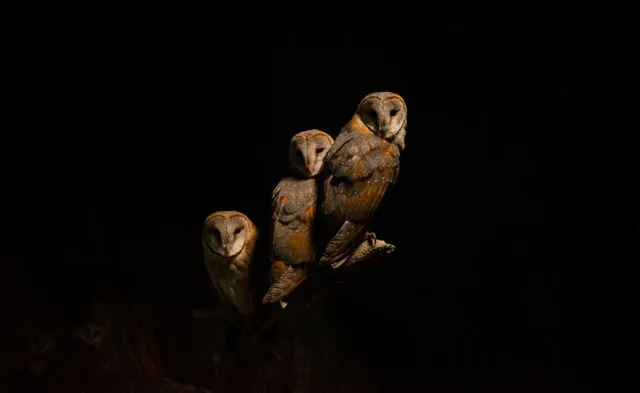
2. Asymmetric Hearing and 3D Audio Maps
When lighting conditions drop to near-zero, vision takes a back seat, and sound takes over. Barn Owls, for example, can capture prey in total darkness using sound alone!
Asymmetric ear placement means species such as the Barn Owl have ear openings positioned at different heights on their skull one ear is higher and angled upward, while the other is lower and angled downward.
Horizontal Position: Determined by the fractional millisecond time difference it takes for a sound to reach the left versus the right ear.
Vertical Position: Determined by sound intensity (a sound from above sounds slightly louder in the higher ear).
The Facial Ruff Reflector: The distinct heart-shaped or round facial disk acts like a satellite dish, funneling faint sound waves directly into the ear canals.
Midbrain Neural Map: Specialized midbrain cells map out sound in a 3D grid, allowing the owl to target prey within a tight 1.5-degree margin.
Did You Know? 🌟
The heart-shaped facial disk on a Barn Owl acts like a natural parabolic satellite dish! It directs microscopic sounds like a mouse stepping on a twig straight into their ears.
3. Stealth Mode: Silent Flight Feathers
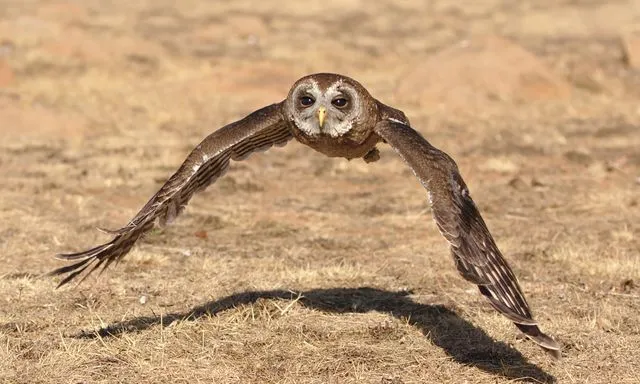
Having great senses means nothing if the prey hears the hunter coming. Standard bird wings create turbulence and flapping noises, but owls have evolved specialized acoustic dampening feathers.
Serrated Edges: The leading edge of an owl’s primary flight feather features comb-like serrations that break up air turbulence into smaller currents, eliminating air vortex noise.
Velvety Down Coating: The surface of the feathers is coated in soft, downy fibers that absorb sound energy.
Fringed Trailing Edges: The trailing edges of the wing feathers end in soft fringes, dampening sound even further as air passes through.
This stealth capability allows owls to swoop down without alerting rodents and enables them to keep listening for prey movements mid-flight!
4. Territory Memory & Perch Advantage
Sensory adaptations are boosted by territorial routine. Studies on nocturnal species (like Tawny Owls) reveal that owls maintain strict hunting territories over long periods.
They build a mental map of their environment memorizing exact branch heights, clearing locations, and flight corridors. Knowing their territory so intimately allows them to dive confidently from perches even when visual details are obscured by darkness.
Sensory & Hunting Adaptation Breakdown
Eye Structure: High density of rod cells & large pupil size – Maximizes light gathering; picks up subtle prey movement.
Ear Layout: Asymmetrical placement (one higher, one lower) – Pinpoints prey distance and depth using sound timing & intensity.
Facial Feathering: Concave facial disk / ruff – Channels faint sound waves straight into the ears.
Wing Feathers: Serrated leading edges with soft velvet texture – Disrupts airflow turbulence for completely silent flight.
Neck Mechanics: 270-degree head rotation capability – Allows 360° scanning without making body movement sounds.
Myth vs. Fact
| Myth | Fact |
| Myth: Owls can turn their heads around in a full 360-degree circle. | ✅ Fact: Owls can rotate their heads up to 270 degrees in either direction, thanks to specialized neck vertebrae and blood vessels that prevent stroke during extreme twists. |
| Myth: All owl species hunt exclusively at night. | ✅ Fact: Roughly one-third of owl species globally are diurnal (daytime) or crepuscular (hunting at dusk/dawn) hunters. |
| Myth: Owls can see in absolute pitch darkness with zero light. | ✅ Fact: Owls require at least a tiny trace of ambient light to see; in total pitch-black environments, they rely strictly on their asymmetric hearing to hunt. |
Quick Fun Facts
Barn Owls possess brain cells explicitly programmed to build an internal auditory map of their surroundings!
When an owl strikes, its talons lock with enormous force to instantly dispatch prey before it can react.
Scientists discovered that owls fly so quietly that acoustic microphones designed for aircraft testing struggle to register their wing flapping sound in laboratory setups!
An owl cannot move its eyes in their sockets; instead, it must turn its entire head to change its view.
Frequently Asked Questions
Owls use their asymmetrical hearing to detect the exact location of rustling movements. By calculating the microsecond delay of sound hitting each ear, their brain builds a precise 3D map to strike even unseen prey!
An owl's eyes are shaped like long tubes rather than spheres, and they are locked in place by bony structures called sclerotic rings. To look around, an owl must rotate its neck up to 270 degrees!
Owls have comb-like serrations on the front of their wing feathers that break up wind turbulence. Combined with a velvety top coating and fringed trailing edges, air glides over their wings without making noise.
No! While many well-known species are nocturnal (night hunters), about one-third of all owl species are diurnal (hunting during the day, like the Snowy Owl) or crepuscular (hunting at dawn and dusk).
Quick Quiz
What special feature allows an owl to fly towards its prey without making a single sound?
A) Jet engines under their wings
B) Serrated leading edges on their flight feathers ✅
C) Heavy weight that pushes air away
D) Gliding only when it rains
Critter Challenge
Go outside at dusk or in a quiet dark room and close your eyes for two minutes. Listen carefully to all the tiny sounds around you and try to map out where each sound is coming from!
💡 Bonus: Research native owl species living in your area and discover whether they hunt during the day, dusk, or late at night!
Want to explore more? Check out an illustrated bird behavior book or watch an official nature documentary on avian flight acoustics!
CritterScore
👀 Night Vision: ⭐⭐⭐⭐⭐(5/5)
👂 Audio Map: ⭐⭐⭐⭐⭐(5/5)
🥷 Flight Stealth: ⭐⭐⭐⭐⭐(5/5)
🔄 Neck Mobility: ⭐⭐⭐⭐⭐(5/5)
🏆 Winner Line: The Owl is nature’s ultimate silent phantom, combining 3D audio maps, low-light vision, and soundproof wings to rule the night sky!
Conclusion
Owls reign supreme as night hunters by uniting hyper-sensitive eyes, asymmetric ear structures, noise-canceling wing feathers, and precise spatial memory. These incredible adaptations make them master predators of the dark!
To discover more fascinating animal survival tricks, explore our fun guides on Why Do Cats Purr? The Real Reasons Behind This Strange Sound and Top 10 Smartest Animals in the World.
Sources & References
• National Geographic – Owl Hunting Mechanisms and Sensory Adaptations
• Smithsonian’s National Zoo – Avian Hearing and Vision Research
• Stanford University Birds Essay – How Owls Hunt
• GeeksforGeeks – How Do Owls Hunt at Night
• Bird of Prey Project – How Do Owls Hunt in the Dark