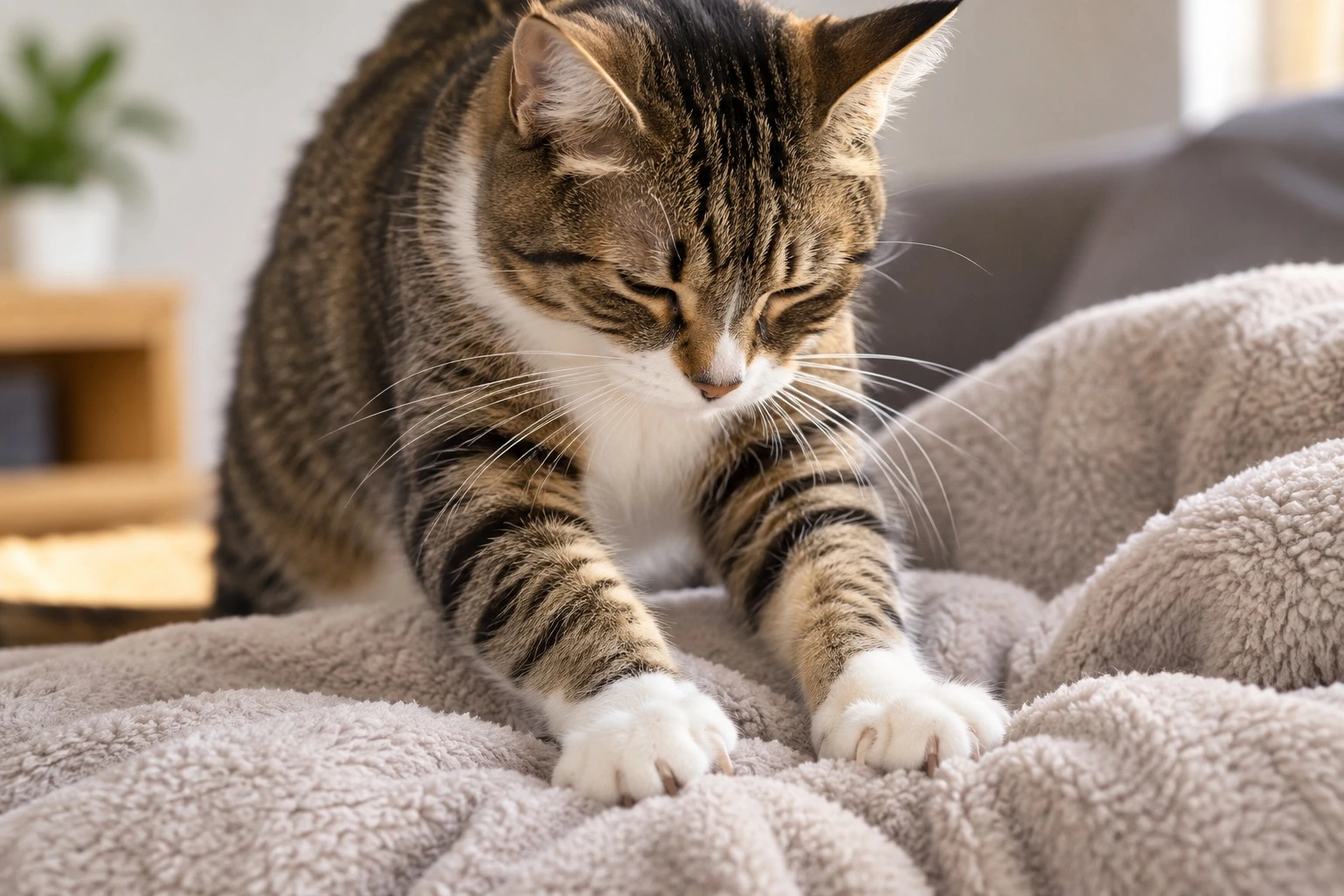
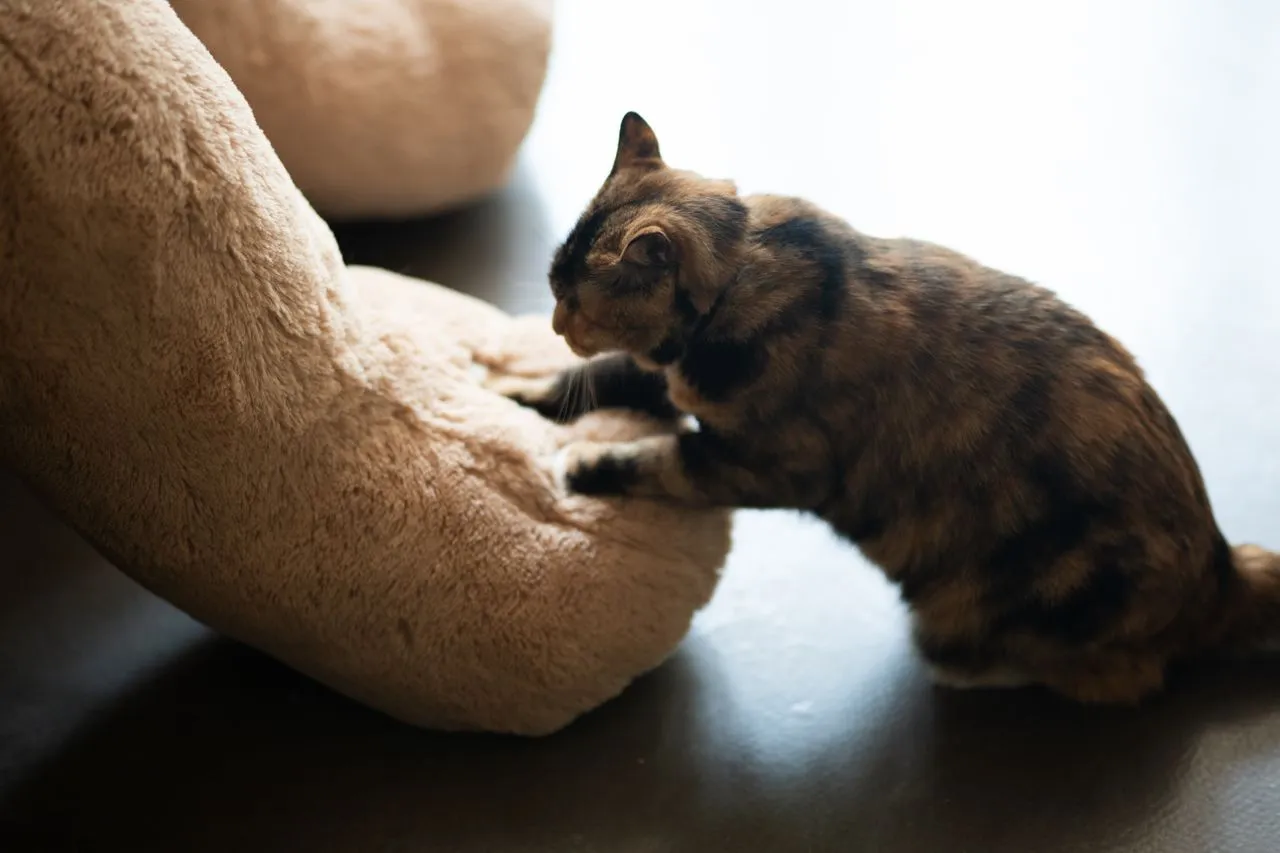
Hey there! If you share your home with a feline friend, you’ve probably experienced this: your cat climbs onto your lap, starts rhythmically pushing their paws in and out—alternating between their left and right paws—as if they are kneading dough. It is cute, sometimes a little claw-y, and utterly mesmerizing. But have you ever wondered why cats actually do this strange little dance?
Let’s dive into the secret world of cat behavior and uncover why our furry companions turn into little bakers right on our laps!
Animal Group: Mammals (Felidae Family)
Key Trait: Rhythmic paw-pushing (often called “making biscuits”)
Why They Do It: Comfort, marking territory, kitten nostalgia, and stretching
When It Starts: From the very first days of nursing as newborn kittens
Global Distribution: Worldwide (found in homes across every continent except Antarctica)
Where in the World Are Domestic Cats Found?
Unlike wild animals with specific natural habitats, domestic cats (Felis catus) live side-by-side with humans all over the globe. From bustling cities in New York and Tokyo to quiet rural farms in Europe and Australia, cats have successfully colonized human settlements on every major continent. Because they are pampered indoor pets or neighborhood wanderers, their geographical distribution is entirely tied to human habitation, making them one of the most widely distributed companion animals on the planet.
Core Feature Details: The Mechanics of Feline Paw Power
Kneading isn’t just a random twitch; it is an instinctive physical action backed by remarkable anatomy.
When a cat kneads, they use the flexible bones and powerful muscles in their front paws and shoulders. Cats have scent glands located softly between the pads of their paws. With every press downward into a soft blanket, cushion, or your leg, these scent glands release a subtle, unique pheromone signature.
While humans can’t smell it, other animals and cats can detect it instantly. This physical action combines muscle coordination, claw extension, and scent-marking into one smooth, rhythmic motion.
Unique Behavioral Insight: The Secret Connection to Motherhood
Why do adult cats keep doing something they learned as babies? It all goes back to nursing.
When kittens are born, they instinctively knead their mother’s belly while nursing to stimulate milk flow. It feels safe, warm, and comforting. As cats grow into adulthood, that comforting neurological trigger remains hardwired into their brains.
Whenever a cat feels exceptionally happy, safe, or sleepy, their brain flashes back to that kittenhood feeling of absolute security. When your cat kneads your lap, it is the ultimate feline compliment—it means they trust you completely and feel as safe with you as they did with their mother!
CritterScore
Raw Strength: 1.5/5 (Gentle, rhythmic muscle flexing)
Agility: 4.5/5 (Incredible feline flexibility)
Special Power: 5/5 (Instant stress relief and pure comfort)
Threat Level to Humans: 0/5 (Unless they accidentally forget to trim their claws!)
Myth vs. Fact
Myth: Cats knead because they are trying to break your bones or hurt you.
Fact: Kneading is a sign of affection, contentment, and comfort. If it hurts, it’s only because their claws are sharp—they aren’t doing it out of aggression!
Myth: Only female cats make biscuits.
Fact: Both male and female cats knead equally. The behavior is driven by emotional comfort and territory marking, not gender.
Quick Quiz
1) What is another popular nickname for cat kneading?
A) Playing piano
B) Making biscuits
C) Paw dancing
(Answer: B) Making biscuits)
2) Where are a cat’s scent glands located that get activated during kneading?
A) Behind their ears
B) On their tail tip
C) Between their paw pads
(Answer: C) Between their paw pads)
Critter Challenge
The next time your cat starts making biscuits on your lap, try gently counting how many times they alternate their paws in one minute, and watch closely to see if they start purring louder!
Frequently Asked Questions (FAQ)
Why do cats purr while they knead?
Purring and kneading both release endorphins that signal extreme happiness, contentment, and deep relaxation.
Should I stop my cat from kneading if their claws hurt?
Don’t punish them, as they only mean to show love. Instead, keep their claws neatly trimmed or place a thick blanket on your lap before they start.
Do wild big cats like lions or tigers knead?
Yes! Big cats like lions, jaguars, and cheetahs have also been observed doing paw-pushing motions on soft ground or grass when they are relaxed.
Conclusion
Cat behavior never ceases to amaze us. That adorable habit of making biscuits on your lap is a beautiful bridge connecting your cat’s wild ancestry and kittenhood instincts to the loving bond they share with you today. By understanding and appreciating these small quirks, we become better pet parents and advocates for animal welfare worldwide.
Related Articles on CritterPages
Why Do Cats Purr? The Real Reasons Behind This Strange Sound
Why Do Dogs Circle Before Lying Down?
Why Do Dogs Lick People? The Real Reasons Behind This Common Behavior
References & Sources
The Humane Society of the United States – Feline Behavior and Body Language Guide.
National Geographic – Understanding Cat Communication and Instinctive Habits.
Ithupol mattum innum enna topic-la intha exact format-la article venum nu sollungol, kandippa tharen!