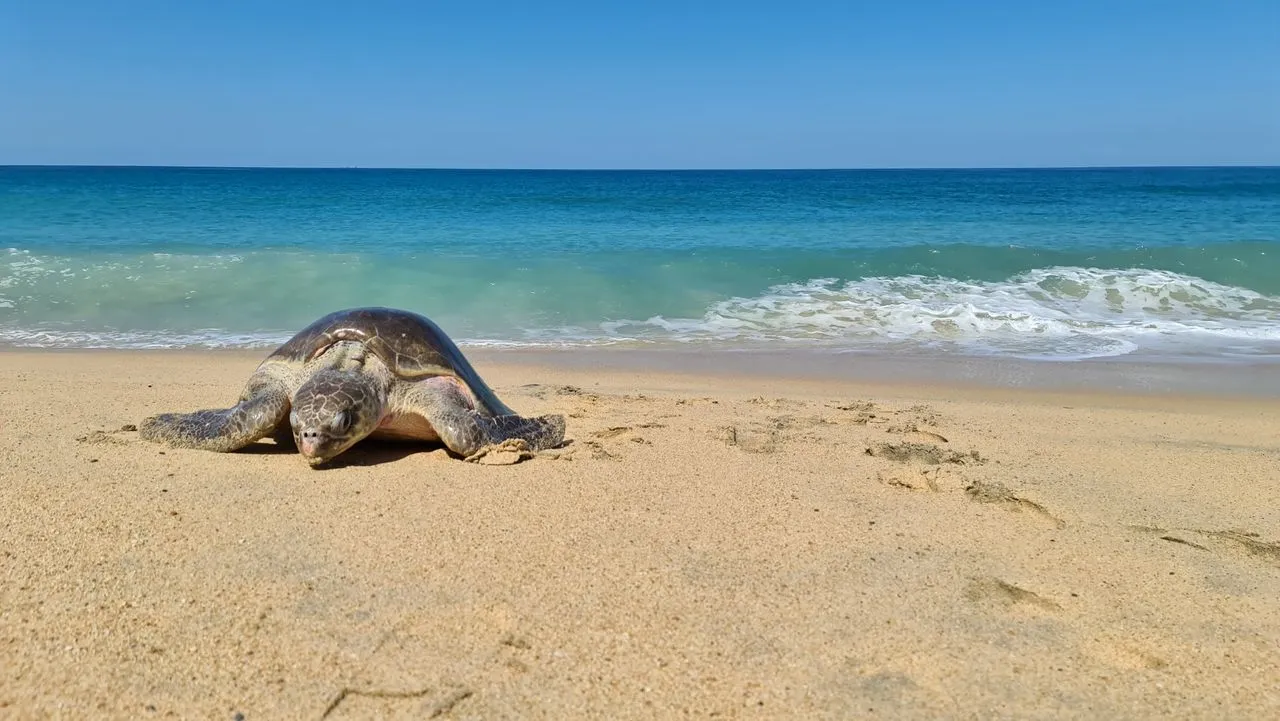
Sea turtles return to their home beaches through natal homing, relying on Earth’s magnetic field as a natural GPS. Each coastline features a distinct magnetic signature that hatchlings memorize and use decades later to navigate back to their exact birthplaces!
Imagine setting off on a solo journey across thousands of miles of open ocean, traveling for over 20 years, and still finding the exact stretch of sand where you were born without using a map or GPS! For female sea turtles, this isn’t fiction—it’s one of nature’s most astonishing navigation feats.
Known as natal homing, this instinct allows loggerheads, green turtles, and leatherbacks to cross entire oceans and return precisely to their birthplace to lay the next generation of eggs.
Species Known for Homing: Loggerhead (Caretta caretta), Green Turtle (Chelonia mydas), Leatherback (Dermochelys coriacea)
Habitat: Open oceans, coastal feeding grounds, and sandy nesting beaches
Primary Compass: Earth’s geomagnetic field lines (inclination angle and intensity)
Secondary Cues: Ocean wave patterns, coastal scents, and water temperature
Time Away: 15 to 30 years before returning to their natal beach as mature adults
Key Navigation Mechanisms
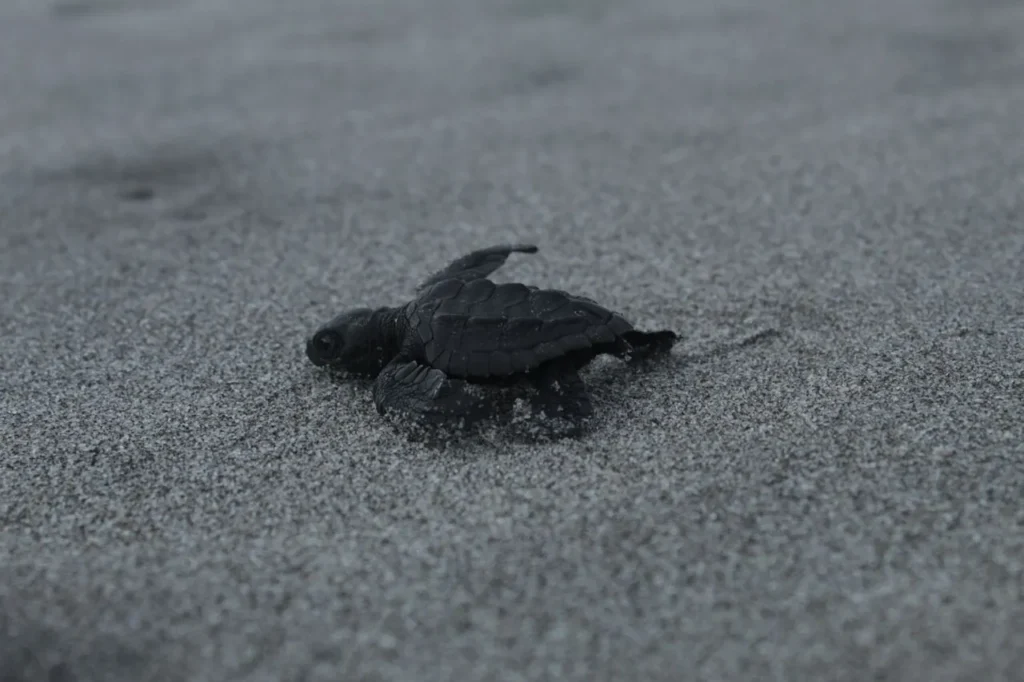
Geomagnetic Navigation: Earth’s magnetic field lines vary across the globe, giving distinct coastal areas their own magnetic signatures. Loggerhead sea turtles remember these signatures and use them like an internal GPS to determine latitude and longitude while migrating across vast ocean expanses.
Magnetic Field Shifts: Earth’s magnetic field slowly shifts over time. Research demonstrates that loggerhead nesting sites move in tandem with these geomagnetic changes over decades!
Sensory Imprinting: Hatchlings imprint on the unique characteristics of their natal beach during their initial sprint from the nest to the ocean. These environmental cues include olfactory smells, low-frequency sound waves, wave directions, and regional offshore currents.
Social Following: In addition to geomagnetic navigation, younger or inexperienced female turtles frequently follow older, more experienced turtles from feeding grounds to established breeding sites.
Did You Know? 🌟
Sea turtles have tiny magnetite particles inside their brains! This acts like an internal biological compass, allowing them to detect both the angle and intensity of Earth’s magnetic field lines.
Primary Navigation Theories
Magnetic Signature: Turtles sense both the angle and intensity of the geomagnetic field to identify their position. Studies show turtle nest locations shift along the coast in tandem with shifts in Earth’s magnetic field.
Natal Imprinting: Hatchlings memorize environmental characteristics (smell, sound, wave patterns) before entering the water. Observed during hatchling beach runs from the nest to the ocean water.
Social Learning: Younger turtles track older, experienced females during long-distance migrations. Supported by behavioral observations at shared oceanic feeding grounds.
Myth vs. Fact
| Myth | Fact |
| Myth: Every single sea turtle returns strictly to the exact spot where it was born to lay eggs. | Fact: While many turtles demonstrate strong natal homing, a large portion of turtles nest on different beaches within the same general region. |
| Myth: Turtles navigate across the ocean strictly using visual landmarks or coastline sights. | Fact: Sea turtles navigate hundreds of miles through open ocean where no landmarks exist by relying on invisible geomagnetic fields. |
Conservation Impact
Knowing that sea turtles rely on geomagnetic fields has changed wildlife conservation practices:
Protecting Nesting Sites: Using metallic wire cages to protect sea turtle eggs on beaches against predators can inadvertently create magnetic interference, potentially disrupting a hatchling’s ability to imprint on its home beach.
Artificial Lighting: Bright beach lights confuse hatchlings trying to navigate toward the ocean using celestial moonlight reflections, driving them inland toward danger instead of toward the sea.
Marine Protected Areas: Identifying magnetic highways helps marine biologists establish international marine corridors across national boundaries.
Quick Fun Facts
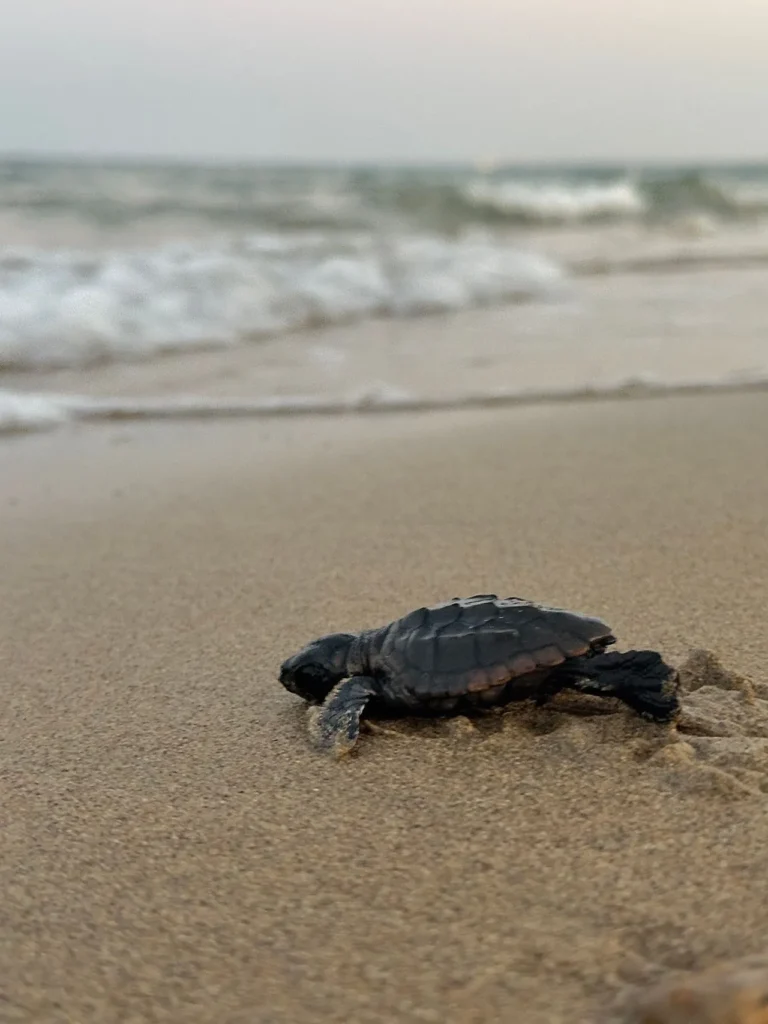
Loggerhead sea turtles often travel over 8,000 miles across the Pacific Ocean before returning to their birth beach!
Male sea turtles spend almost their entire lives at sea and rarely ever return to land after hatching.
Hatchlings run down the beach as fast as possible not just to escape predators, but to “program” their magnetic compasses before hitting the waves!
Sea turtles have been navigating Earth’s oceans using magnetic fields for over 100 million years!
Frequently Asked Questions
Depending on the species, sea turtles reach sexual maturity between 15 and 30 years of age. Only then do female turtles make their very first migration back to their natal beach to lay eggs!
If a natal beach is altered or blocked by seawalls, turtles will usually nest on neighboring beaches within the same regional geomagnetic zone.
No. Male sea turtles return to the general coastal waters near their birth region to mate with females, but they almost never step onto dry sand again.
CritterScore
🧭 Magnetic Navigation: ⭐⭐⭐⭐⭐(5/5)
🧠 Natal Memory: ⭐⭐⭐⭐⭐(5/5)
🌊 Ocean Endurance: ⭐⭐⭐⭐⭐(5/5)
🏖️ Beach Precision: ⭐⭐⭐⭐(4/5)
🏆 Winner Line: The Sea Turtle is nature’s ultimate global navigator, using built-in magnetic GPS to find home after decades at sea!
Conclusion
Sea turtles remain one of the planet’s most gifted ocean travelers. By combining magnetic field detection, environmental imprinting, and ancestral instinct, they conquer thousands of miles of open water to bring life full circle.
To discover more incredible wildlife mysteries, explore our fun guides on How Do Owls Hunt in Complete Darkness and how bees know which flowers have nectar.
Sources & References
• National Geographic – Sea Turtle Migration and Magnetic Navigation
• Smithsonian Ocean – How Do Sea Turtles Find Their Natal Beach?
• Sea Turtle Conservancy – Research and Conservation Tracking Data