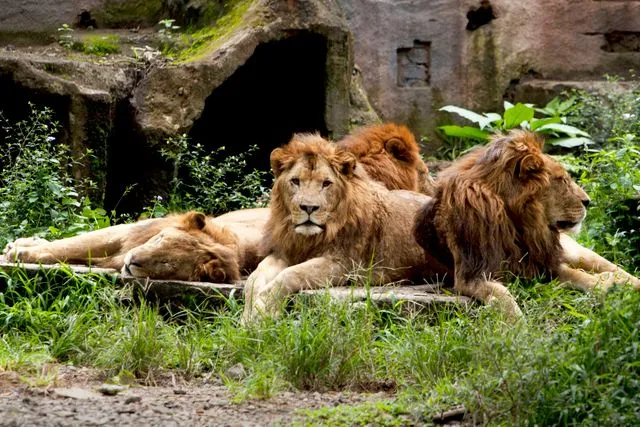
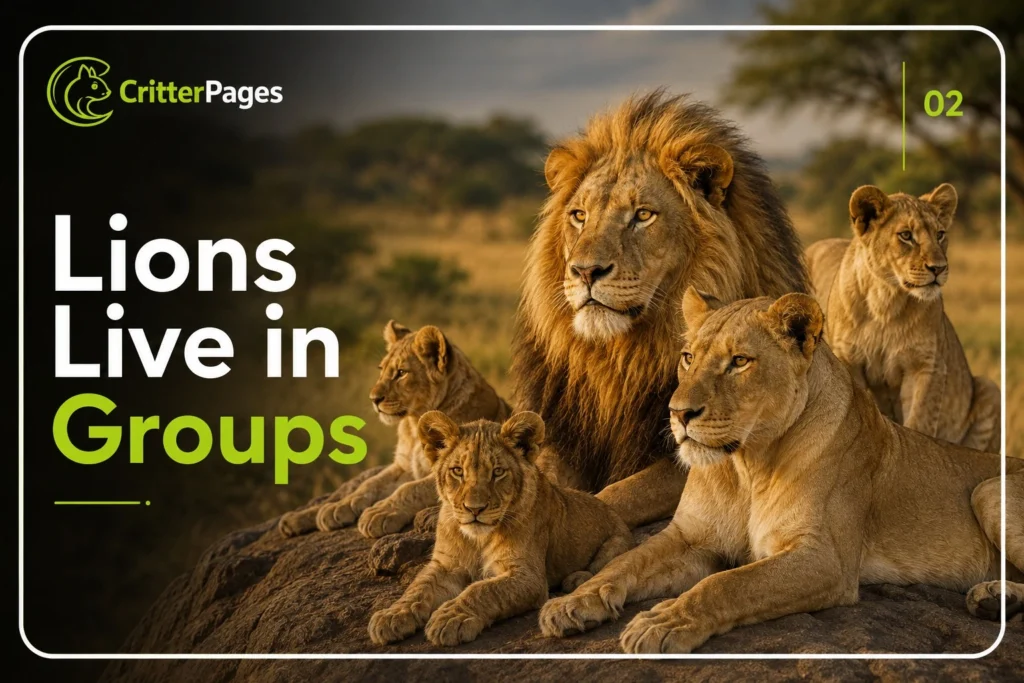
Lions live in groups called prides because working together makes it much easier to hunt big prey and protect their territory. Teamwork helps lionesses raise cubs safely while male lions defend the family from rival packs!
Imagine playing a giant game of tag on the sunny African grasslands where your entire family works together as a super-powered team. It sounds like a fun weekend activity, but for wild lions, living together is an incredible matter of survival!
These majestic, golden-furred big cats are famous across the world as the kings of the jungle. But while most other wild cats like leopards and tigers prefer living all by themselves, lions choose a totally different lifestyle by forming close-knit families.
In this guide, you’ll discover the secret science behind why lions live in groups and how their pride teamwork works. It is the perfect information to make your next school science project roar!
Animal: African lion
Home: African grasslands and savannas
Food: Mainly meat from large herbivores
Group Name: Pride
Baby Name: Cub
Weight: Approximately 120–190 kg for adult males
Speed: Approximately 50–80 km/h in short bursts
Hunting Big Snacks Together
The main reason many lions live in groups is that catching dinner on the open savanna is tough work! Large plant-eating animals like zebras, wildebeests, and buffaloes are heavy, fast, and packed with dangerous horns or hooves.
By hunting in teams, female lions (lionesses) can spread out across the tall grass to surround their prey. One group of lionesses might sneak up from behind to steer an animal toward other hidden pride members waiting to pounce.
Teamwork Power: Working together allows lionesses to tackle prey that is typically much larger than a single cat could capture alone.
Saving Energy: Group hunting lets individual lions conserve energy instead of chasing fast prey across miles of hot land.
Higher Success: A team effort typically increases the chances of bringing home a meal for the entire family!
Raising Cubs in a Big Animal Nursery
Living in a pride creates an awesome support system for baby lion cubs! When lionesses give birth, they don’t have to raise their little ones alone.
All the mothers in a pride share parenting duties in a communal nursery setting. If one mother is out hunting with the group, another aunt or mother stays behind to babysit, feed, and protect the playful cubs from danger.
Did You Know? 🌟
A lion’s roar is so incredibly loud that other animals can hear it from approximately 8 kilometers (5 miles) away! Lions use their thunderous roars to talk to their pride members and warn outside lions to stay off their territory.
Guarding the Kingdom's Borders
A lion pride claims a home territory that can cover anywhere from 20 to 400 square kilometers! Keeping such a huge patch of land safe takes constant monitoring.
Male lions usually handle perimeter security duty for the pride. Their heavy manes and sharp claws help them look big and intimidating, which warns rival roaming males to keep their distance.
Territory Protection: Defending land ensures the pride keeps its valuable water holes and hunting grounds.
Scaring Off Hyenas: Large groups help keep rival predators like spotted hyenas from stealing hard-earned food.
Loud Warnings: Males patrol the borders and roar to announce that the area is already taken.
Comparing Big Cat Lifestyles
Lion Lifestyle:
Often lives in a social pride of typically 10 to 40 members and can cooperate with other lions to hunt and protect cubs.
Tiger Lifestyle:
Usually lives completely alone, establishes its own solitary territory, and hunts prey entirely by itself.
Myth vs. Fact
| Myth | Fact |
| Myth: Male lions do all the hunting for the pride. | ✅ Fact: Female lionesses perform most of the hunting for the group! |
| Myth: Lions live in tropical rain forests. | ✅ Fact: Most wild lions live in sunny savannas and grasslands, not jungles! |
| Myth: Every lion species lives in a pride. | ✅ Fact: Some adult male lions roam alone or in small duo coalitions without a full pride. |
Quick Fun Facts
Male lions spend up to approximately 20 hours a day resting to save their energy for nighttime patrols.
Scientists discovered that a male lion’s dark, thick mane shows that he is healthy, strong, and attractive to other pride members!
Lionesses in a pride are usually related, including mothers, daughters, sisters, and aunts.
A baby cub is typically born with faint spots on its fur that help it camouflage in tall grass!
Quick Quiz
What is the main reason lionesses hunt in groups?
- A) They like to show off their fast running speeds
- B) Working together helps them surround and catch large prey ✅
- C) They need help carrying heavy backpacks
- D) They only hunt during loud thunderstorms
Critter Challenge
Can you find 3 other wild animals that live in social groups to stay safe and hunt together?
Draw a picture of your favorite group animal and label its team members for your next school science report!
Frequently Asked Questions
A lion pride typically includes around 15 members, but group sizes can range from 4 to over 40 lions depending on available food! This usually consists of related females, their baby cubs, and a small coalition of adult males.
Yes, male lions do join in on hunts! While females do most of the daily hunting, heavy males step in when the pride needs extra strength to bring down massive animals like buffaloes or giraffes.
Lions sleep for approximately 16 to 20 hours a day to conserve their energy. Because hunting large animals requires massive bursts of power, resting during the hottest hours keeps them ready for night hunts.
When young male lions reach approximately 2 to 3 years of age, they typically leave their birth pride. They roam as nomads until they are strong enough to challenge other males for their own territory!
CritterScore
⚡ Hunting Power: ⭐⭐⭐⭐⭐(5/5)
🧠 Intelligence: ⭐⭐⭐⭐(4/5)
🤝 Teamwork: ⭐⭐⭐⭐⭐(5/5)
🛡️ Defence Power: ⭐⭐⭐⭐(4/5)
🏆 Winner Line: The ultimate social cat team that proves family power rules the African savanna!
Conclusion
Lions live in groups because teamwork makes catching large prey, raising cute cubs, and guarding land much easier. By combining their strength inside a pride, these incredible big cats stay healthy and protected across the sunny grasslands.
To explore more amazing animal survival tricks, check out our fun guides on the top 10 smartest animals in the world and why sea turtles are endangered.