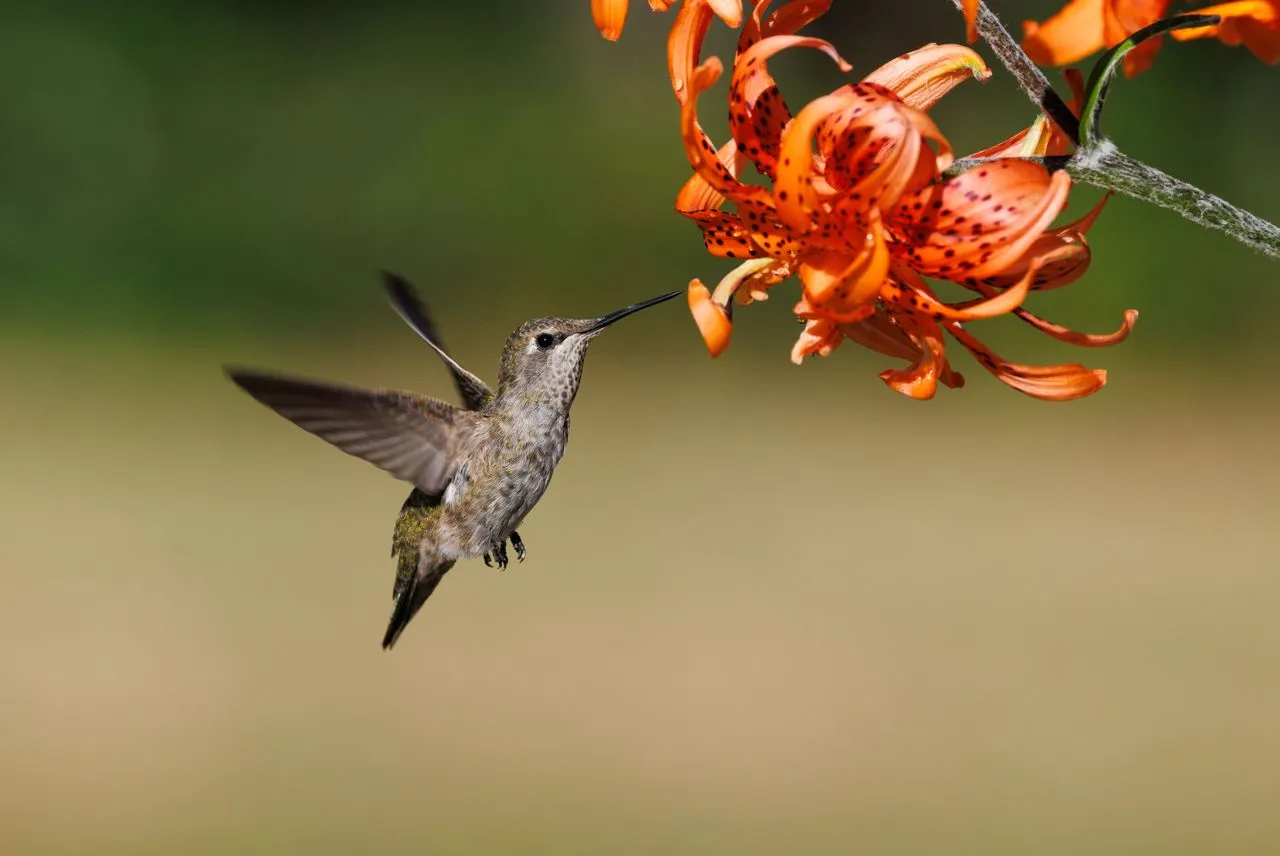
Hummingbirds can fly backward because their unique ball-and-socket shoulder joints allow their wings to rotate 180 degrees in a figure-eight pattern. This movement generates lift on both the forward and backward strokes, giving them complete acrobatic control in the air!
Imagine flying a tiny helicopter that can zoom forward, hover motionless in midair, fly upside down, and reverse out of tight spots without turning around. It sounds like a futuristic high-tech gadget, but for a hummingbird, it is just a normal day at the flower garden!
Most birds can only generate power when flapping their wings downward, meaning they can only fly forward. Hummingbirds are nature’s ultimate stunt pilots because their bodies have evolved a completely unique way of moving through the sky.
In this guide, you’ll discover the secret science behind how hummingbirds fly backward and why this flight power helps them survive. It is the perfect information to make your next school science report soar!
Animal: Ruby-throated hummingbird
Home: Forests, gardens, and meadows in the Americas
Food: Flower nectar, tree sap, and tiny flying insects
Group Name: Charm or bouquet
Baby Name: Chick
Weight: Typically 2–6 grams (lighter than a nickel!)
Wing Speed: Approximately 50–80 beats per second
The Secret Figure-Eight Wing Trick
The secret behind a hummingbird’s backward flight lies in its incredible shoulder joints! While most birds have flexible elbows and wrists, a hummingbird’s wing bones are short and rigid, attached to a flexible ball-and-socket shoulder joint.
This special joint allows the hummingbird to rotate its entire wing up to 180 degrees. Instead of flapping up and down like a pigeon, a hummingbird sweeps its wings back and forth in a rapid figure-eight motion.
-
Power on Both Strokes: Sweeping back and forth generates lift on both the forward stroke and the backward stroke.
-
Angle Control: By tilting the angle of its wings backward, the bird pushes air forward, which propels its body in reverse!
-
Instant Reversal: Allows the bird to back away from a flower petal smoothly after sipping sweet nectar.
Backing Out of Narrow Flower Petals
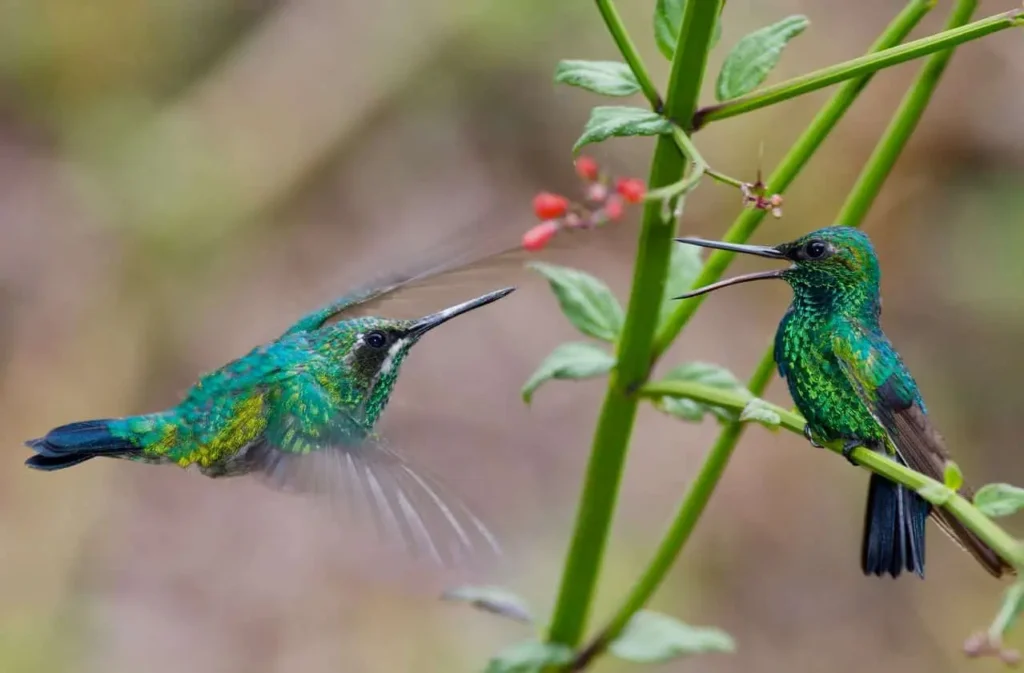
Why do hummingbirds need to fly backward in the first place? It all comes down to how they eat! Hummingbirds have long, slender beaks designed to reach deep inside tube-shaped flowers.
When a hummingbird finishes drinking nectar, it cannot simply turn around inside a narrow blossom. Flying backward lets the tiny bird reverse out of the flower instantly without damaging its delicate wings or long beak.
Did You Know? 🌟
A hummingbird’s heart beats at an incredible rate of up to approximately 1,200 beats per minute while flying! That super-fast heart helps pump oxygen to massive chest muscles, which make up about 30% of the bird’s total body weight.
High-Speed Engine with Huge Appetite
Flapping wings up to 80 times every single second requires an enormous amount of energy! To power their high-speed flight engines, hummingbirds must eat constantly throughout the day.
A busy hummingbird typically visits 1,000 to 2,000 flowers every single day to consume its own body weight in sugary nectar. Without this constant sugar intake, their energy reserves would run out in a matter of hours!
Hummingbird Flight vs. Typical Bird Flight
Hummingbird Flight:
Moves wings back and forth in a flexible figure-eight pattern; generates lift on both wing strokes to fly backward, forward, sideways, and hover.
Typical Bird Flight:
Flaps wings up and down using flexible elbows and wrists; generates lift mostly on the downstroke and can only fly forward.
Myth vs. Fact
| Myth | Fact |
| ❌ Myth: All birds can fly backward if they try hard enough. | ✅ Fact: Hummingbirds are the only birds capable of sustained, controlled backward flight! |
| ❌ Myth: Hummingbirds suck up nectar through their beaks like a drinking straw. | ✅ Fact: Their tongues have tiny fringe tips that lap up nectar rapidly using capillary action! |
| ❌ Myth: Hummingbirds never land and stay in the air all day. | ✅ Fact: They spend approximately 70% to 80% of their day perching on branches to rest and digest food. |
Quick Fun Facts
-
Bee hummingbirds living in Cuba are the smallest birds in the world, weighing less than approximately 2 grams!
-
Scientists discovered that hummingbirds can hover perfectly still even during windy rainstorms by adjusting the angle of their tail feathers.
-
Hummingbirds have such small, weak legs that they cannot walk or hop on the ground—they can only use their feet to perch!
-
During migration, some ruby-throated hummingbirds fly nonstop across the Gulf of Mexico for approximately 20 hours!
Frequently Asked Questions
A hummingbird's wings flap at approximately 50 to 80 beats per second during normal flight! During high-speed courtship dives, some small species can flap their wings up to 200 times per second.
While no other bird can fly backward with full control, many flying insects like dragonflies, hoverflies, and bees can hover and fly backward using similar figure-eight wing movements!
While hummingbirds can fly forward at speeds of up to approximately 48 km/h (30 mph), their backward flight is typically slower and used for precise maneuvers around flower blossoms.
The distinct "humming" sound comes from the rapid vibrations created as their stiff wings cut through the air dozens of times every second!
Quick Quiz
What special joint motion allows hummingbirds to sweep their wings in a figure-eight pattern?
-
A) Flexible wrist joints that bend double
-
B) Ball-and-socket shoulder joints that rotate 180 degrees ✅
-
C) Spring-loaded knee joints
-
D) Hollow beak joints
Critter Challenge
Try moving your arms in a figure-eight pattern as fast as you can for 10 seconds! Draw a picture of a hummingbird reversing away from a bright red flower for your next school science report!
CritterScore
⚡ Flight Speed: ⭐⭐⭐⭐(4/5)
🌀 Agility & Control: ⭐⭐⭐⭐⭐(5/5)
🧠 Adaptability: ⭐⭐⭐⭐(4/5)
🔋 Energy Use: ⭐⭐⭐⭐⭐(5/5)
🏆 Winner Line: The undisputed acrobat of the sky that turns wing-flapping into a high-speed reverse superpower!
Conclusion
Hummingbirds can fly backward thanks to flexible shoulder joints that let their wings sweep in a rapid figure-eight loop. This amazing adaptation allows them to generate lift on every wing stroke, giving them the agility needed to back out of flowers and rule the garden sky.
To explore more amazing animal survival tricks, check out our fun guides on the How Do Octopuses Escape Predators? Their Amazing Survival Tricks and Why Do Lions Live in Groups? The Pride Strategy Explained.