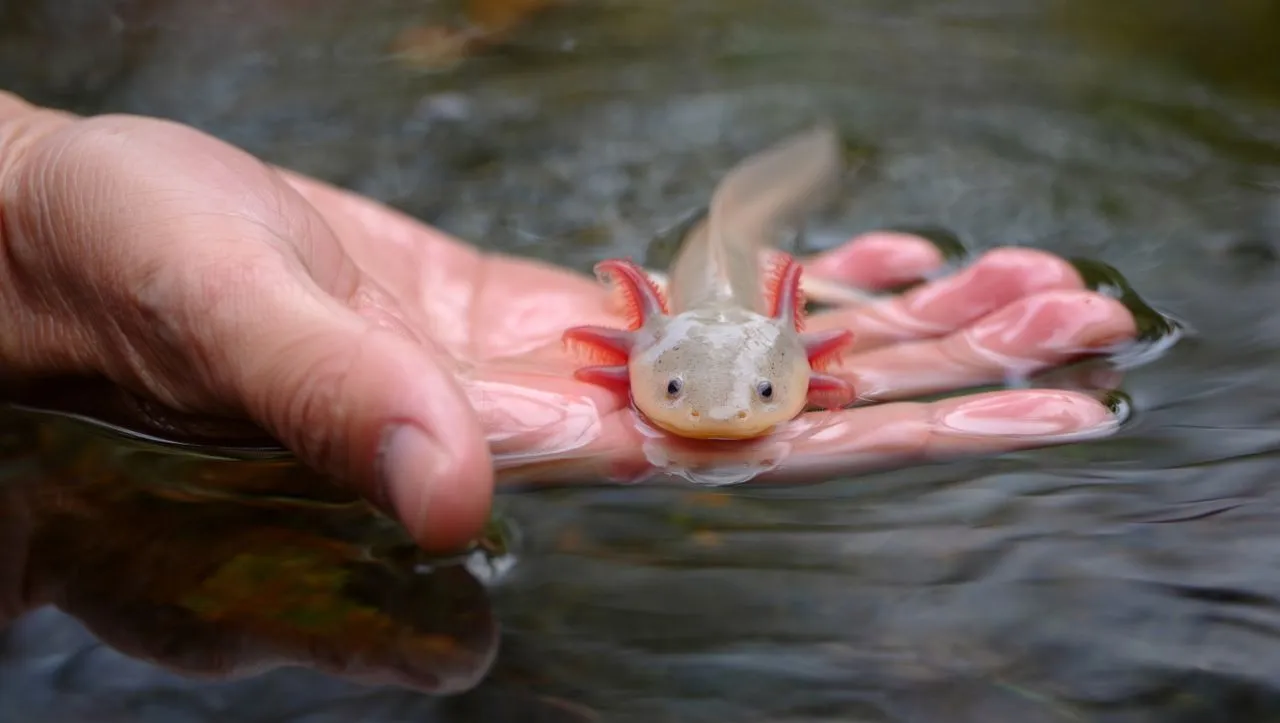
Hey there! Have you ever seen a picture of an axolotl? With their feathery pink gills, tiny hands, and permanent, adorable smile, they look like real-life Pokémon straight out of a cartoon! While millions of people adore them in video games and aquariums around the world, there is a heartbreaking truth behind their cute face: in the wild, axolotls are on the brink of extinction.
How did one of the most famous amphibians on the internet become critically endangered in its own backyard? Let’s dive into the crystal-clear waters of Mexico’s ancient lakes and uncover the real threats facing these amazing creatures!
Animal Group: Amphibians (Ambystomatidae Family / Mole Salamanders)
Key Trait: Neoteny (stays in its aquatic larval stage forever) and incredible limb regeneration
Conservation Status: Critically Endangered (IUCN Red List)
Main Threats: Urban pollution, invasive predatory fish, and severe habitat destruction
Average Weight: 2 to 8 ounces (60 to 225 grams)
Global Distribution: Native exclusively to Lake Xochimilco near Mexico City
Where in the World Are Axolotls Found?
Unlike animals that roam across entire continents, wild axolotls (Ambystoma mexicanum) have one of the smallest natural habitats on Earth. They are native exclusively to the ancient lake and canal complex of Lake Xochimilco (and historically Lake Chalco) located right on the southern edge of Mexico City.
Because they never lose their feathery external gills or move onto dry land like normal salamanders, they depend 100% on clean, cool freshwater canals filled with aquatic plants to survive and lay their eggs.
Core Feature Details: The Science Behind Their Superpower & Fragility
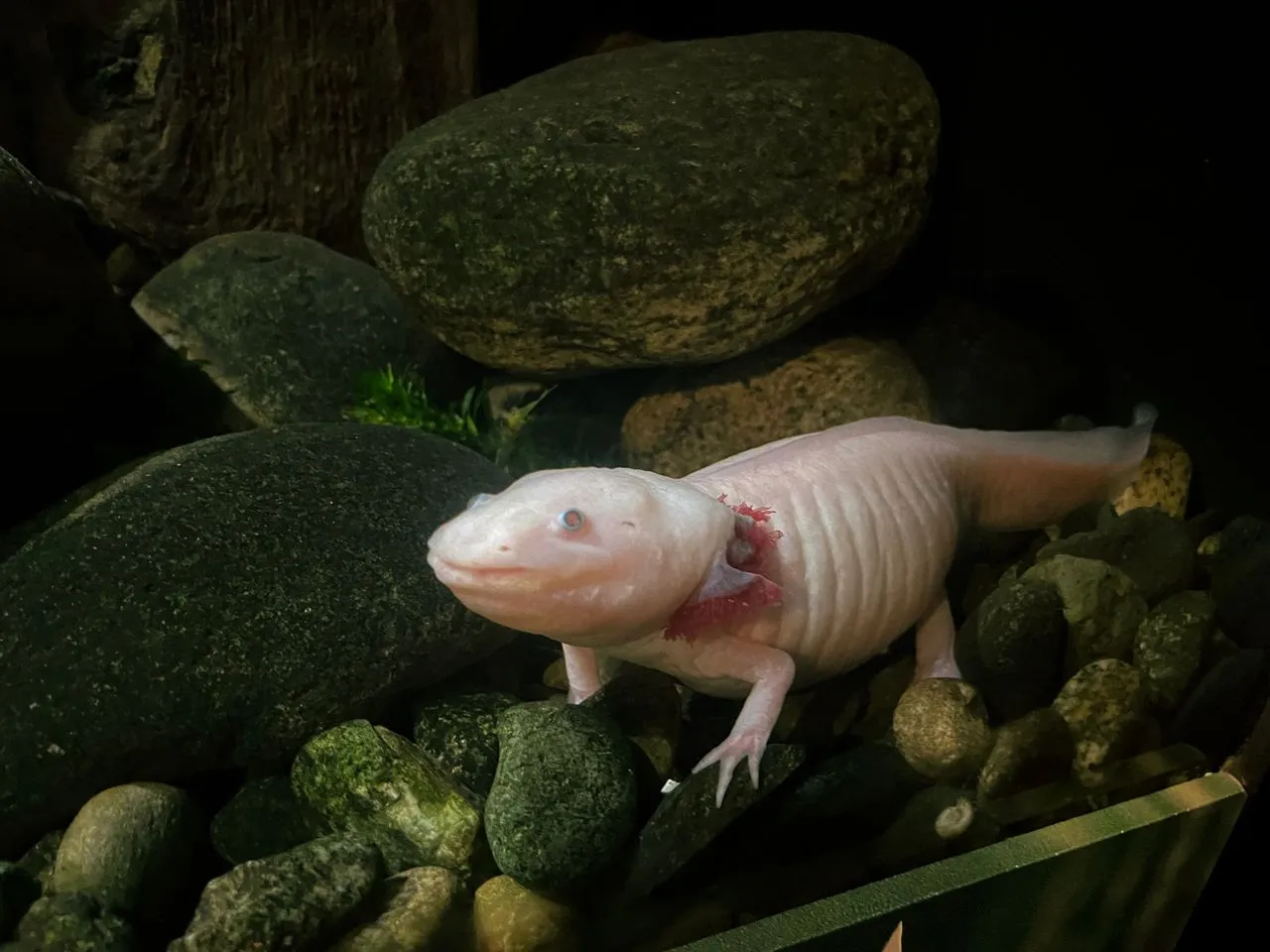
Axolotls are biological superstars. Unlike humans, who form scar tissue when injured, an axolotl can completely regrow lost limbs, spinal cords, jawbones, and even parts of its heart and brain without leaving a single scar!
However, this biological magic requires a very specific, healthy environment. Axolotls breathe primarily through their delicate external gills and permeable skin. Because their skin absorbs everything directly from the surrounding water, even tiny amounts of chemical runoff, sewage, or heavy metals instantly poison their bodies. Their greatest biological strength—absorbing oxygen through thin skin—becomes their biggest weakness in polluted water.
Unique Behavioral Insight: The Triple Threat to Wild Axolotls
Why have wild axolotl populations plummeted from thousands per square kilometer in the late 1990s to fewer than 1,000 individuals left in the wild today? It comes down to three major human-driven factors:
Rapid Urbanization & Water Drain: As Mexico City expanded into a massive metropolis, ancient lakes were drained to prevent flooding and build housing, shrinking the axolotl’s home to a fraction of its original size.
Severe Water Pollution: Wastewater, agricultural pesticides, and plastic trash flowing into the Xochimilco canals have degraded water quality, making it toxic for sensitive axolotl eggs and larvae.
Invasive Predatory Fish: In the 1970s and 1980s, non-native carp and tilapia were introduced into the lakes to boost local fishing. Unfortunately, these aggressive fish eat baby axolotls and compete with adults for food, devastating the native population.
CritterScore
Raw Strength: 1/5 (Soft-bodied, delicate underwater amphibians)
Agility: 3/5 (Graceful swimmers using their long, finned tails)
Special Power: 5/5 (Unmatched full-limb and organ regeneration ability)
Threat Level to Humans: 0/5 (Completely harmless and gentle creatures)
Myth vs. Fact
Myth: Axolotls are thriving in the wild because you can easily buy them as pets everywhere.
Fact: While millions of axolotls live in home aquariums and science labs worldwide, wild populations in Mexico are critically endangered and nearly extinct.
Myth: Axolotls are a type of weird, legged fish.
Fact: They are actually amphibians (salamanders)! Unlike most salamanders, they skip metamorphosis and keep their underwater gills for their entire lives.
Quick Quiz
1) Where is the ONLY natural wild habitat of the axolotl located?
A) The Amazon River in Brazil
B) Lake Xochimilco in Mexico
C) Lake Biwa in Japan
(Answer: B) Lake Xochimilco in Mexico)
Which invasive fish species were introduced into axolotl habitats and began eating their young?
A) Great white sharks
B) Carp and tilapia
C) Electric eels
(Answer: B) Carp and tilapia)
Critter Challenge
Next time you wash your hands or use household cleaners, think about where that water eventually flows-keeping local waterways clean helps protect delicate amphibians like frogs and salamanders right in your own neighborhood!
Frequently Asked Questions (FAQ)
Can pet axolotls be released back into the wild in Mexico to boost numbers?
No! Captive pet axolotls lack wild survival instincts and can introduce deadly diseases into the tiny remaining wild population.
How long do axolotls live?
In safe, clean conditions, axolotls can live between 10 and 15 years.
What are scientists doing to save wild axolotls?
Biologists and local farmers in Mexico are building “chinampas” (traditional floating gardens) that naturally filter canal water and create safe, predator-free sanctuaries for wild axolotls.
Conclusion
The axolotl is a living wonder of nature, holding genetic secrets that could one day revolutionize human medicine. Losing them in the wild would mean losing an irreplaceable piece of Earth’s evolutionary history. By supporting wetland restoration and sustainable eco-tourism in Xochimilco, we can help ensure Mexico’s smiling salamanders keep swimming for centuries to come.
Related Articles on CritterPages
Why Are Pangolins Endangered? The Threats Facing the World’s Only Scaled Mammals
How Do Starfish Regrow Their Arms? Amazing Regeneration Explained